13 production products,
shipped end-to-end
A mix of confidential client work (under NDA) and products from our own Web3 ecosystem. Each case is real, in production, with measurable outcomes.
Yupland — Web3 Ecosystem
Yupland — Web3 Ecosystem
Web3 · Flagship
A self-built, multi-chain Web3 ecosystem on NEAR — 15+ products linked by one economy and 21 tokens, where real users have lived, traded and crafted for two years across two market cycles.
Web3 games die with the market — in a bear, NFTs rot in wallets, communities scatter and metrics are bot-inflated. The goal: an ecosystem whose on-chain activity doesn't depend on price, driven by real wallets, not bots.
The Reputation Game — an antifragile loop of trade → craft → burn → win that gets stronger under pressure. Cross-chain crafting (Alchemy Lab), a burn wallet (Duplo), mass NFT distribution (Sender — 120 NFTs per tx) and AI products, all live on NEAR + TON on custom indexers and smart contracts.
Alchemy Lab
Cross-chain NFT crafting across NEAR + TON — 29K+ crafts, 283 recipes. Burning solves inflation; recipes drive retention.
NFT-Sender
Mass multi-chain distribution at 120 NFTs per transaction, past the NEAR throughput limit — no analogs on the market.
YupSoul — AI Music Oracle
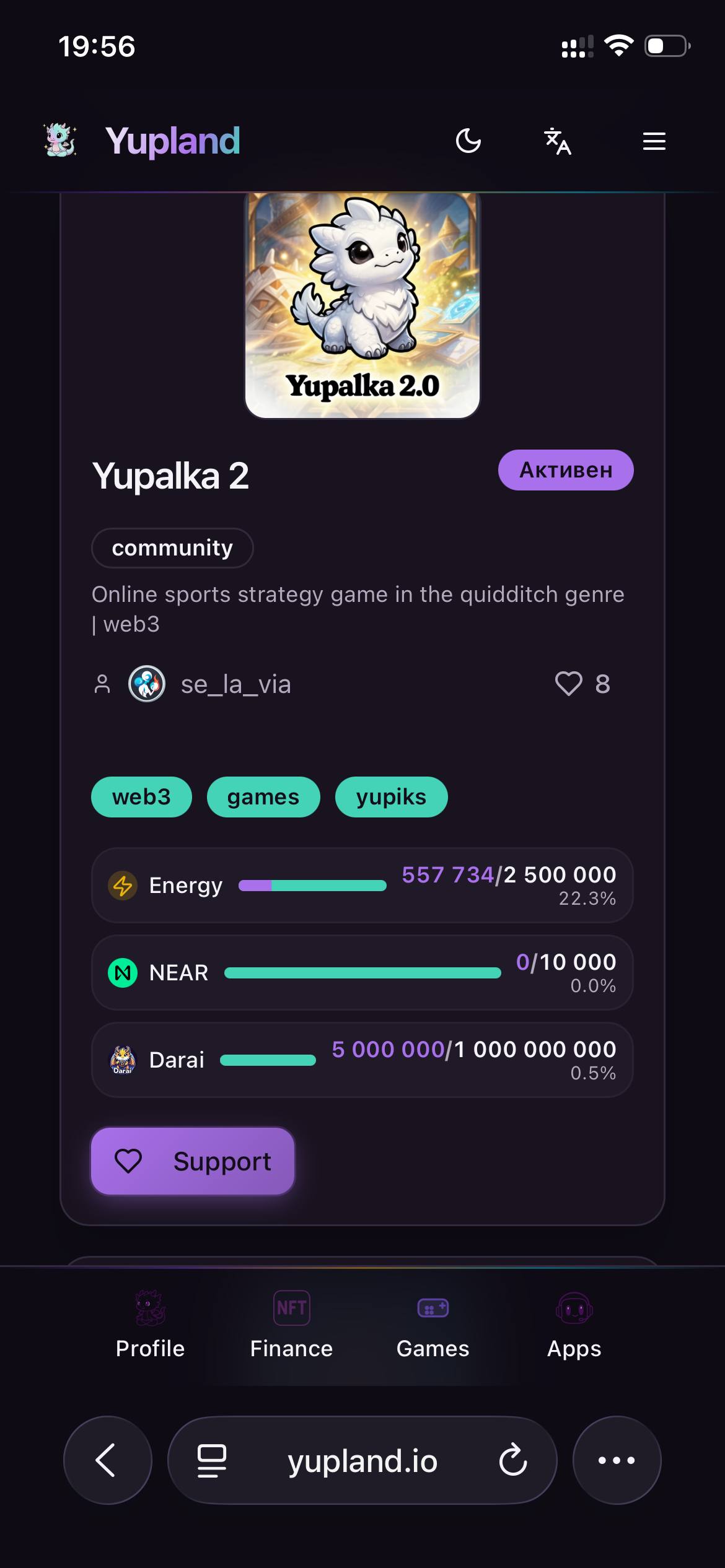
The flagship AI product: personal songs from a natal chart across web, Telegram, VK, iOS & Android in 5 languages.
- Custom NEAR indexers tracking every on-chain event in real time
- Sender pushing 120 NFTs per transaction past the NEAR throughput limit
- Cross-chain bridge logic uniting NEAR + TON liquidity in one loop
- Self-sustaining for 1.5 years — zero grants, zero VC
YupLand Portal — Ecosystem Hub
YupLand Portal — Ecosystem Hub
Web3 · Portal
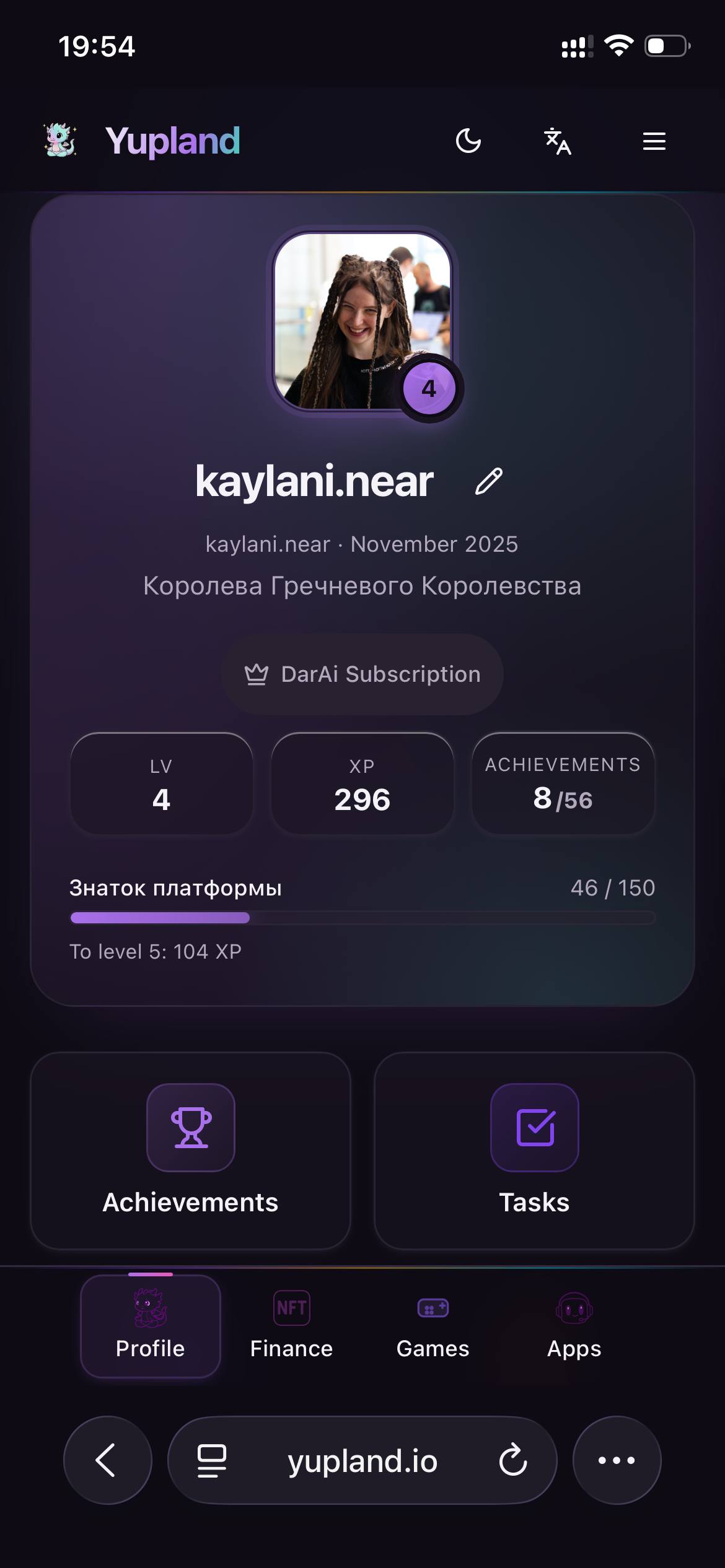
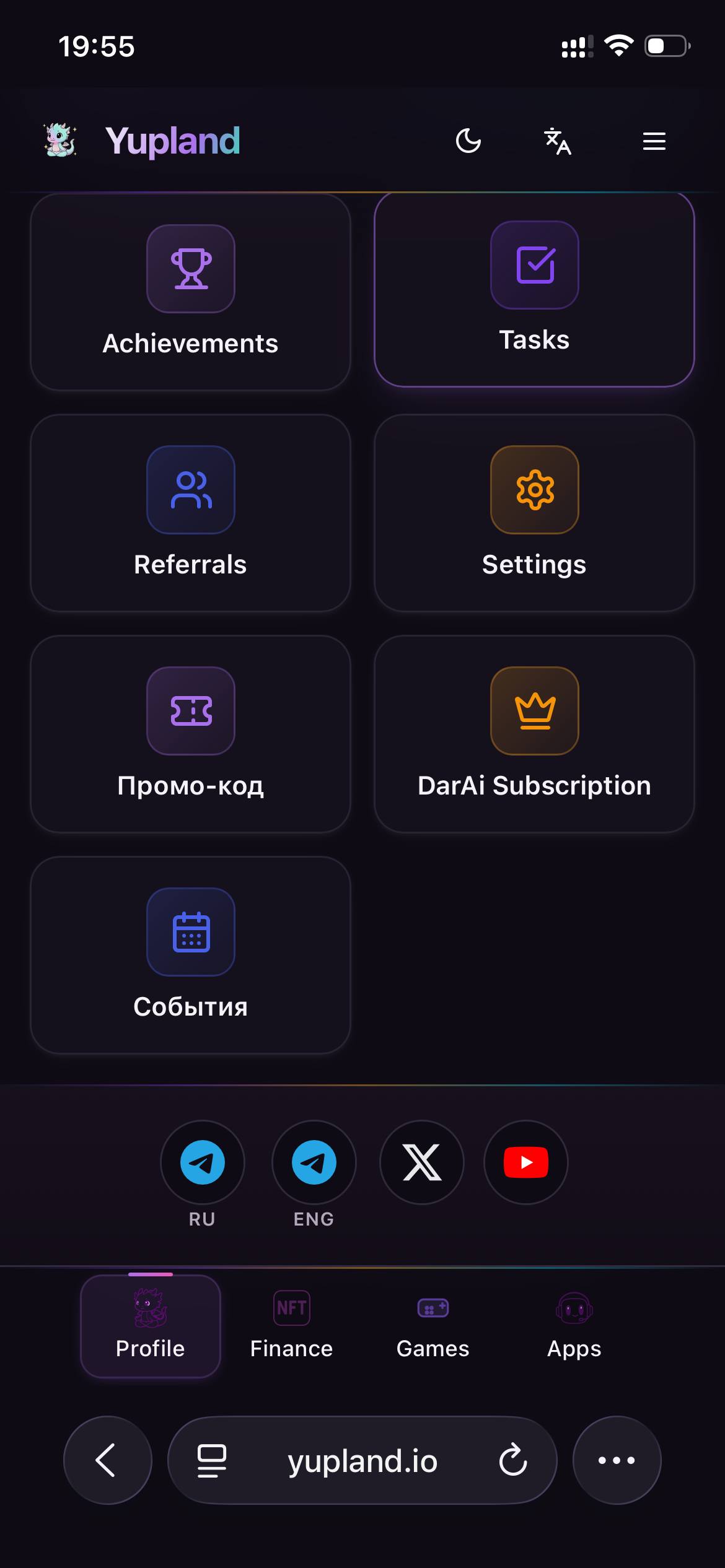
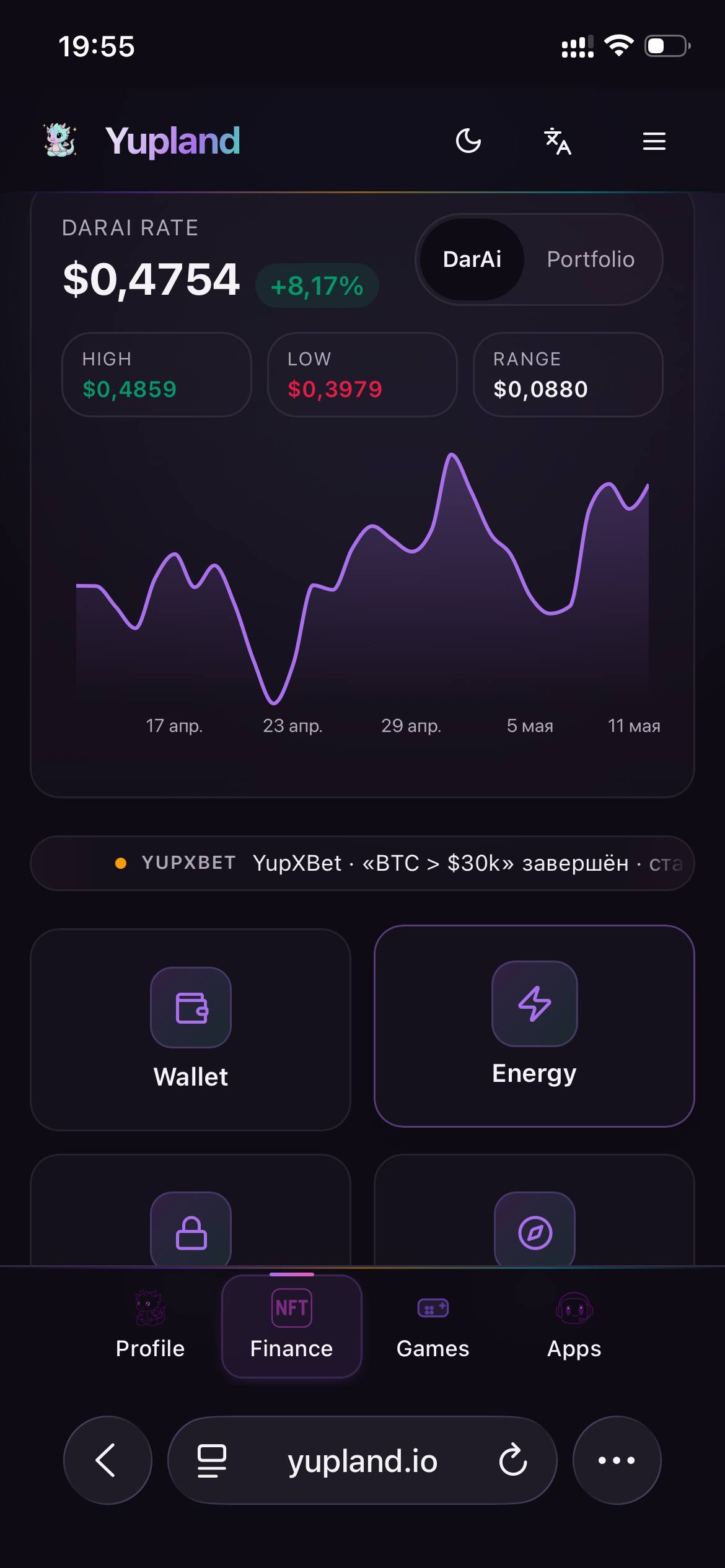
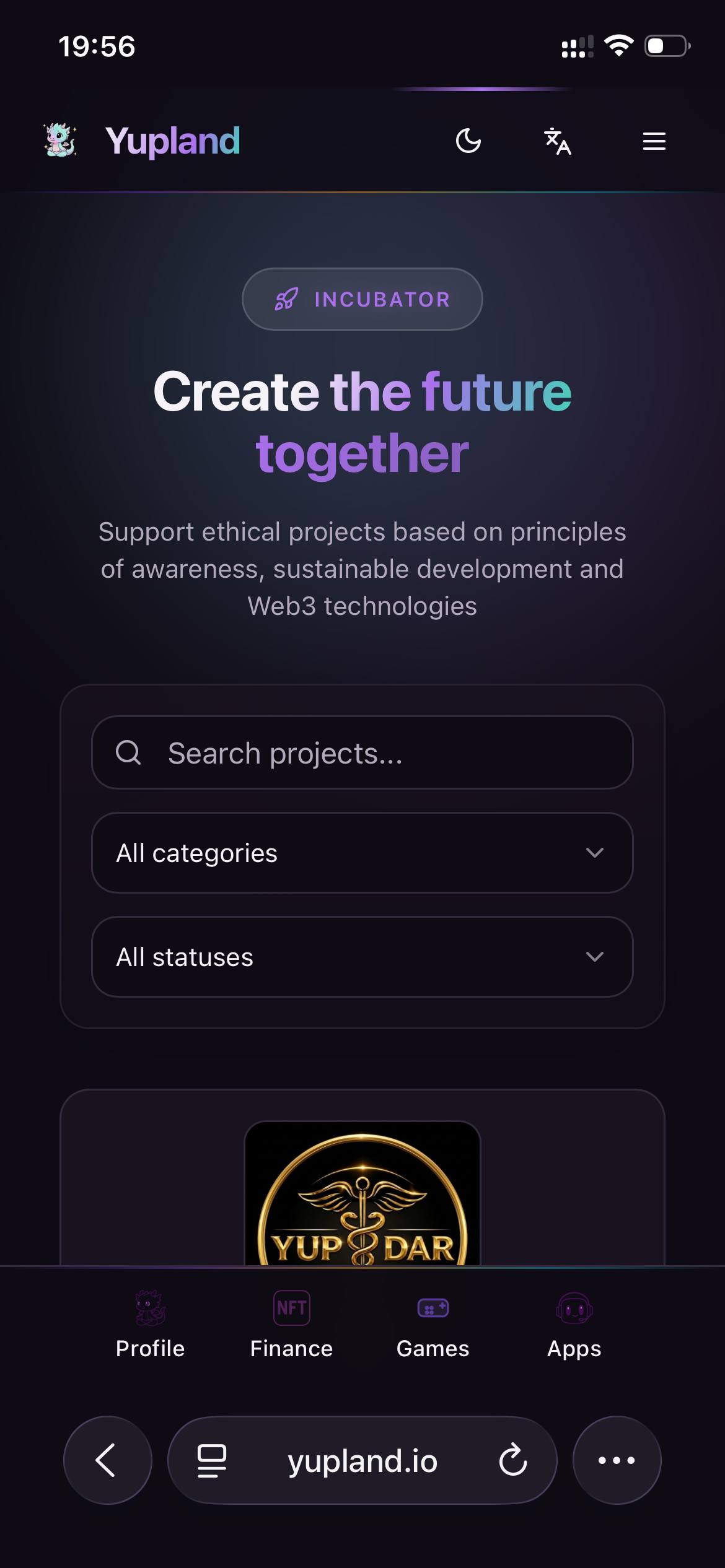
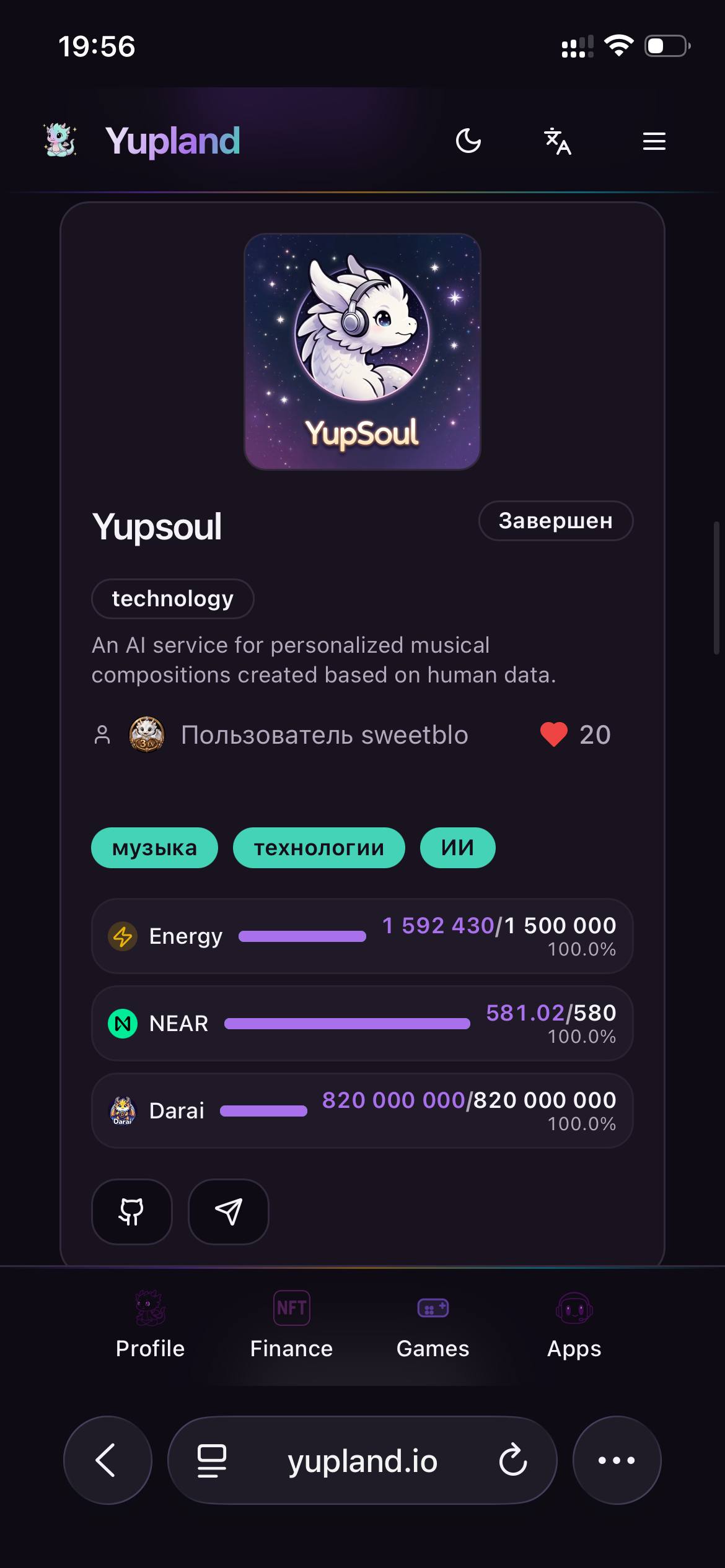
YupLand Portal is the navigation layer of the Yupland ecosystem — one app, web + Telegram Mini App, that bundles a custom CMS, DEX, incubator, wiki, gamification layer (levels / achievements / quests / loot boxes / NFT staking), YupPay, prediction market (Polymarket-style), YupDrop, subscriptions, referrals, social graph and a Telegram notification engine. Built solo by one engineer.
The Yupland ecosystem has 15+ products and 21 tokens spread across NEAR + TON. Users needed one place to navigate the whole world — wallet, balances, staking, games, marketplace, governance — without bouncing between apps. The portal also had to host games and services built by the community and incubator projects, not just by the studio.
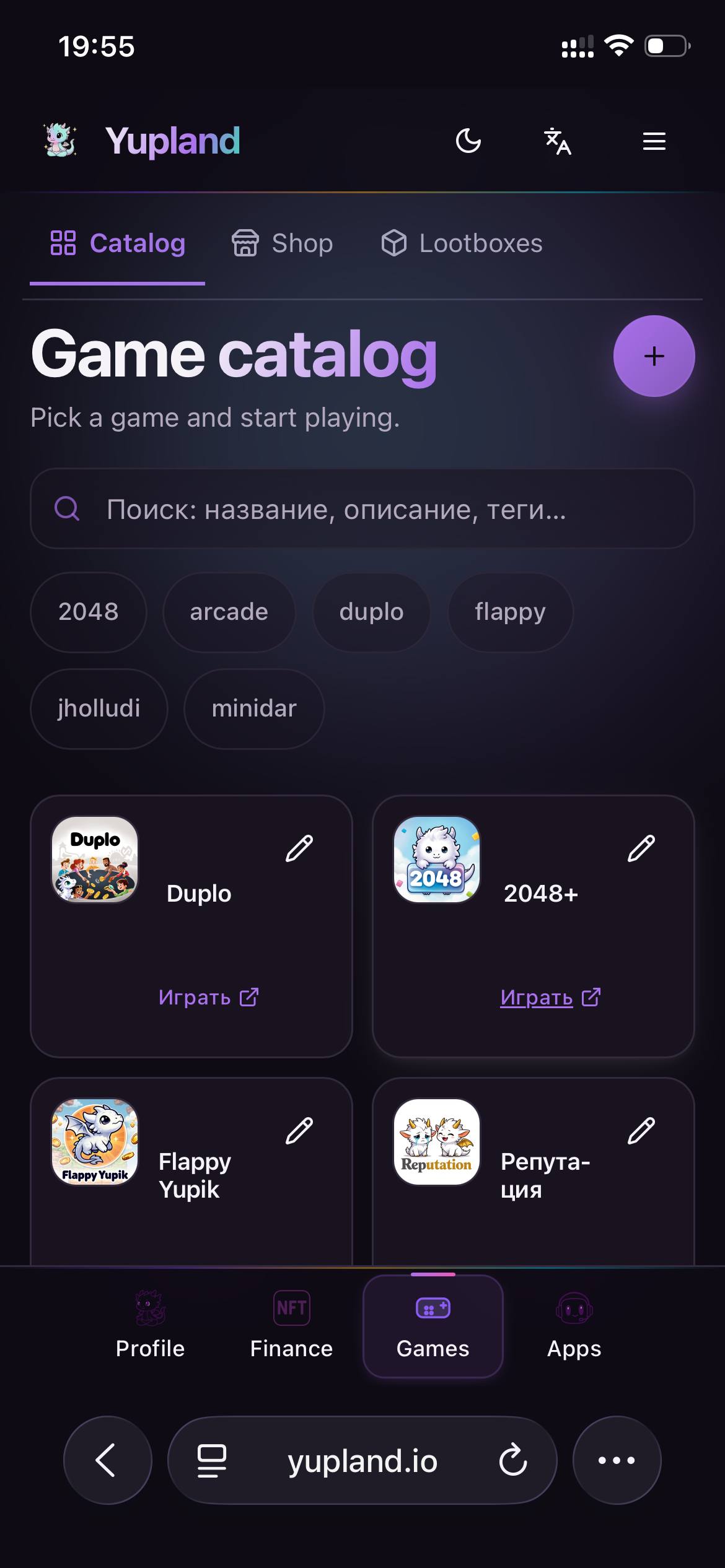
A single full-stack app — web + Telegram Mini App on one codebase — wrapping the entire YupLand world. Custom CMS, DEX trading every ecosystem token pair (13 NEAR FTs + 8 TON jettons), incubator with no-strings community funding, gamification layer (levels, achievements, quests, daily loot boxes, NFT staking), YupPay, YupDrop, Polymarket-style prediction market, subscriptions in Darai, in-portal transactions, friends graph, events calendar, promo codes, reward pool and a Telegram notification engine for users and admins. Vibe-coded end-to-end.
Wallet & DEX
Connect a wallet, see your Yupland tokens live on-chain, watch the Darai chart. Built-in DEX trades every ecosystem pair across 13 NEAR FTs and 8 TON jettons — from MED to Darai to bees.
Gamification + Energy economy
Levels, achievements, quests and the daily Duplo loot loop — ~2M boxes opened per month (rewards batched into single transactions to save NEAR gas). NFT staking earns Energy, spent on the same loot loop.
Games marketplace (hybrid build)
10+ mini-games in one portal — Flappy, 2048+, Reputation Calculator, YupLottery, YupLink, feeding checkers, plus deep links into YupSoul, YupDar, Sender and KeksVPN. Built by the studio, by the community and via the incubator.
Incubator (no-strings crowdfunding)
Project applies → admin approves → community funds it freely in NEAR / USDT / Energy / Darai. 9 projects live. Some become standalone ecosystem products.
- Web and Telegram Mini App share a single codebase
- Custom indexer mirrors YupAI NFTs from the wallet without moving them
- Loot-reward batching — multiple rewards stacked into one transaction to save NEAR gas
- Throughout: workarounds for NEAR API rate limits and throughput constraints
- Telegram notification engine — rewards for users, low-pool alerts for admins
AI Music Generation Platform
AI Music Generation Platform
AI · Mobile
An end-to-end AI music platform delivered across three surfaces — a Telegram Mini App and native iOS & Android apps — all on one unified backend.
Generate music reliably at scale and accept payments in a regulated market — all from a single codebase that ships to web and both app stores.
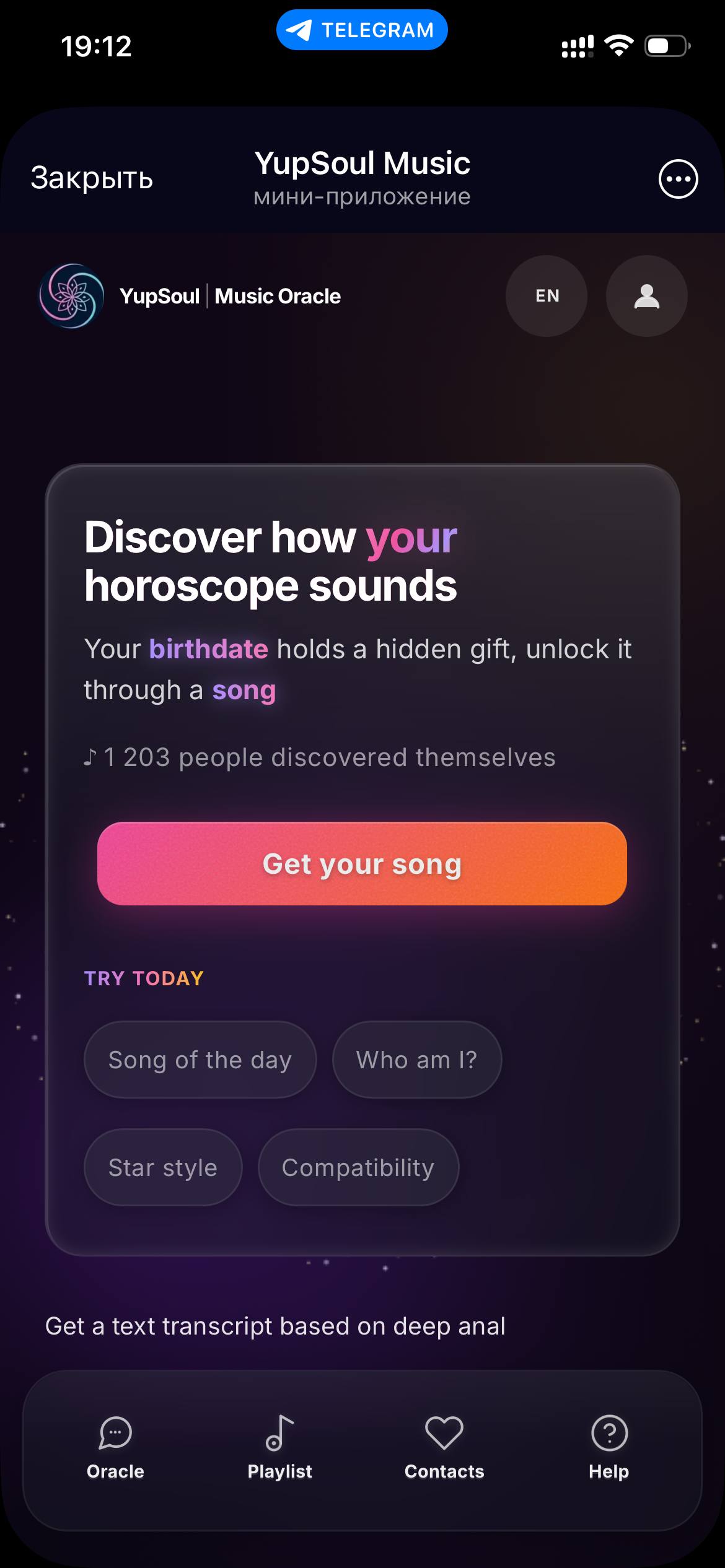
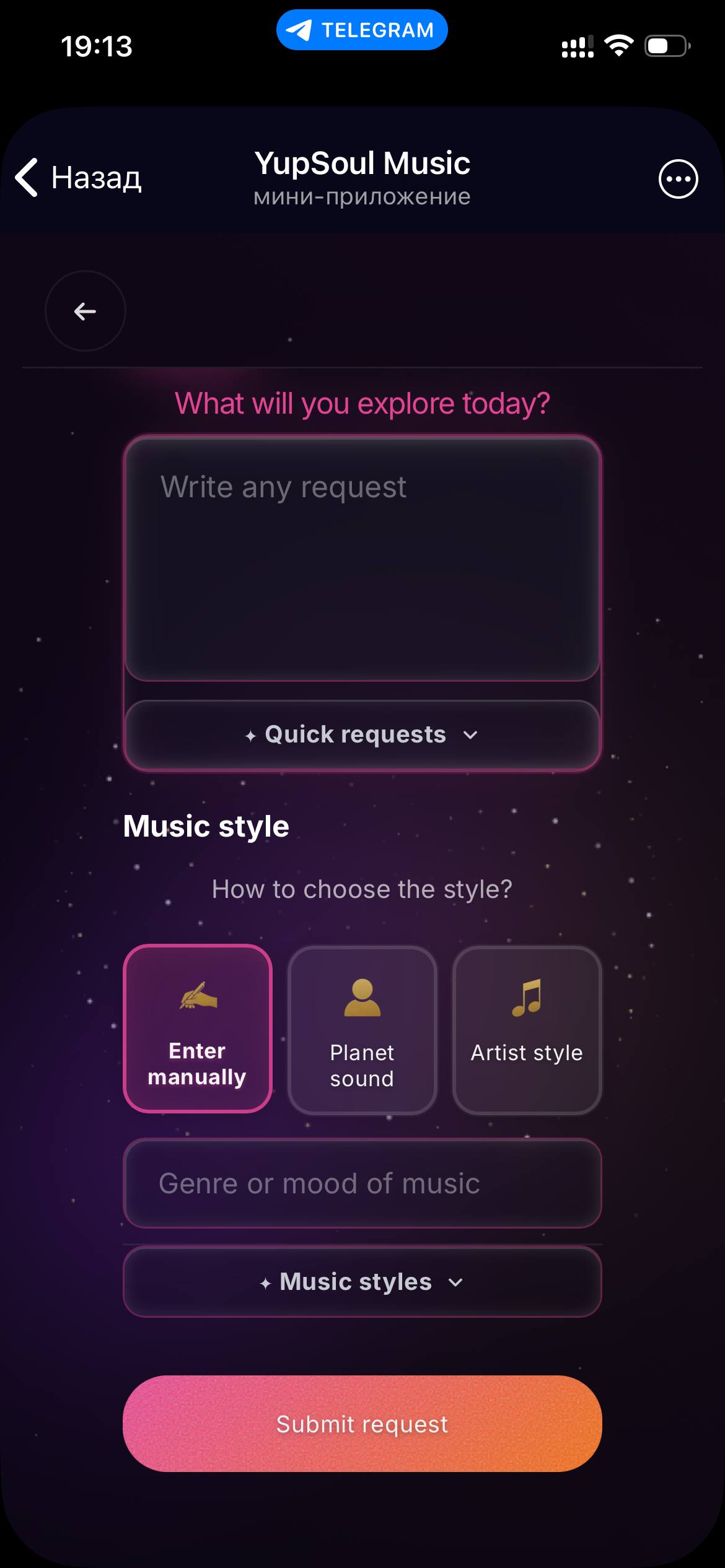
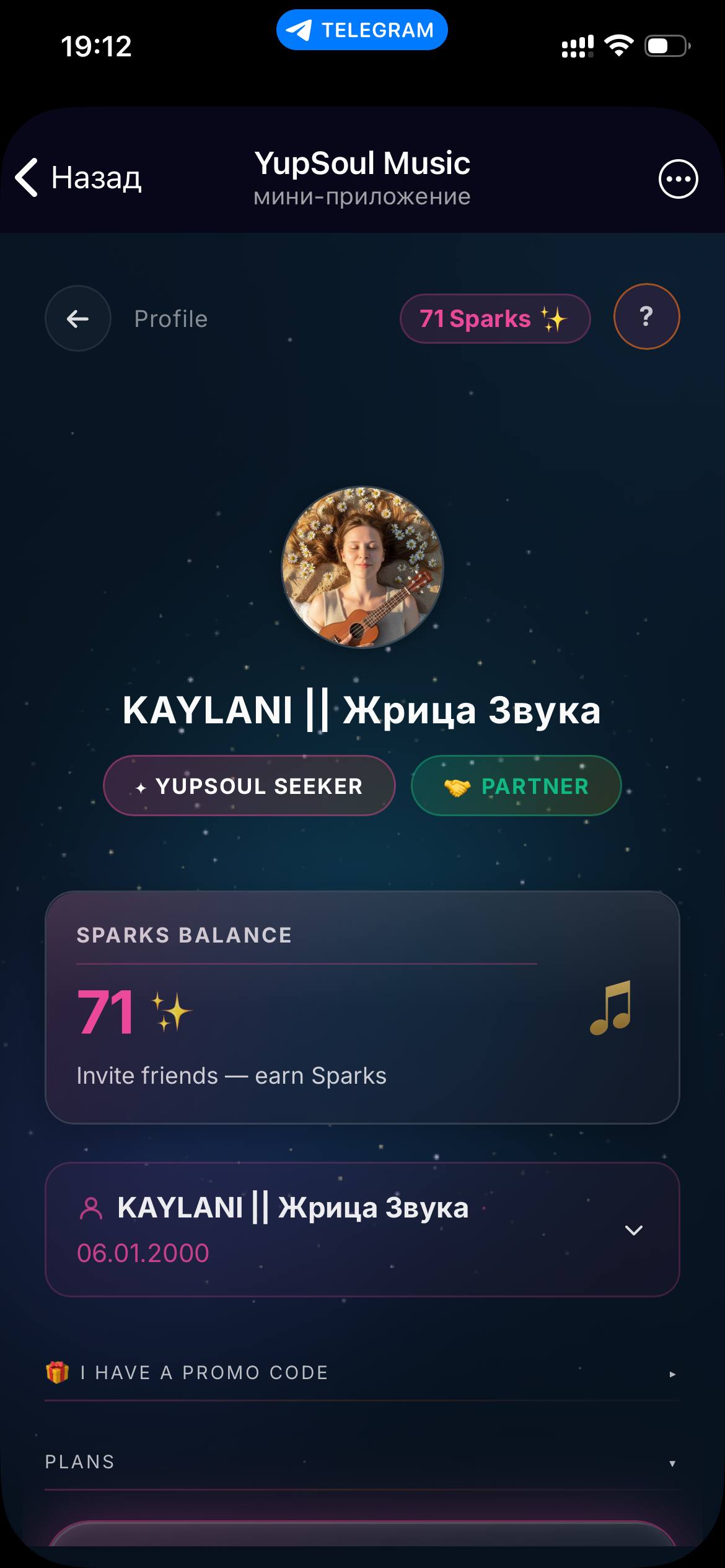
A multi-stage AI pipeline with retry/failover, one backend powering all three clients, three payment integrations including card acquiring in a regulated market, and two-environment CI/CD with Sentry monitoring.
AI Sales Funnel + RAG Agent
AI Sales Funnel + RAG Agent
AI · RAGA complete AI-powered sales funnel for an online education business — from landing pages to a RAG agent that answers in the founder's own voice.
Turn a founder's huge content library into an always-on sales agent that genuinely sounds like them — wired into the existing CRM and protected from referral fraud.
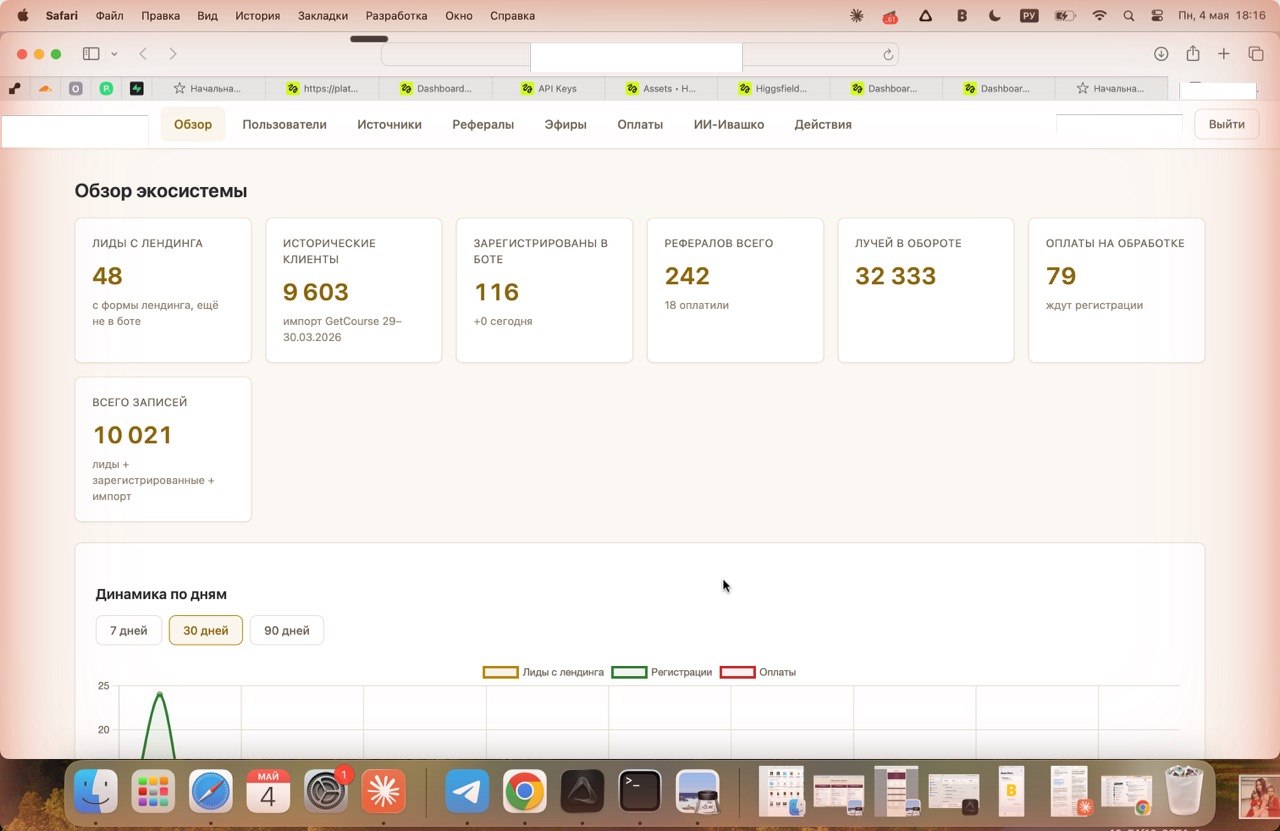
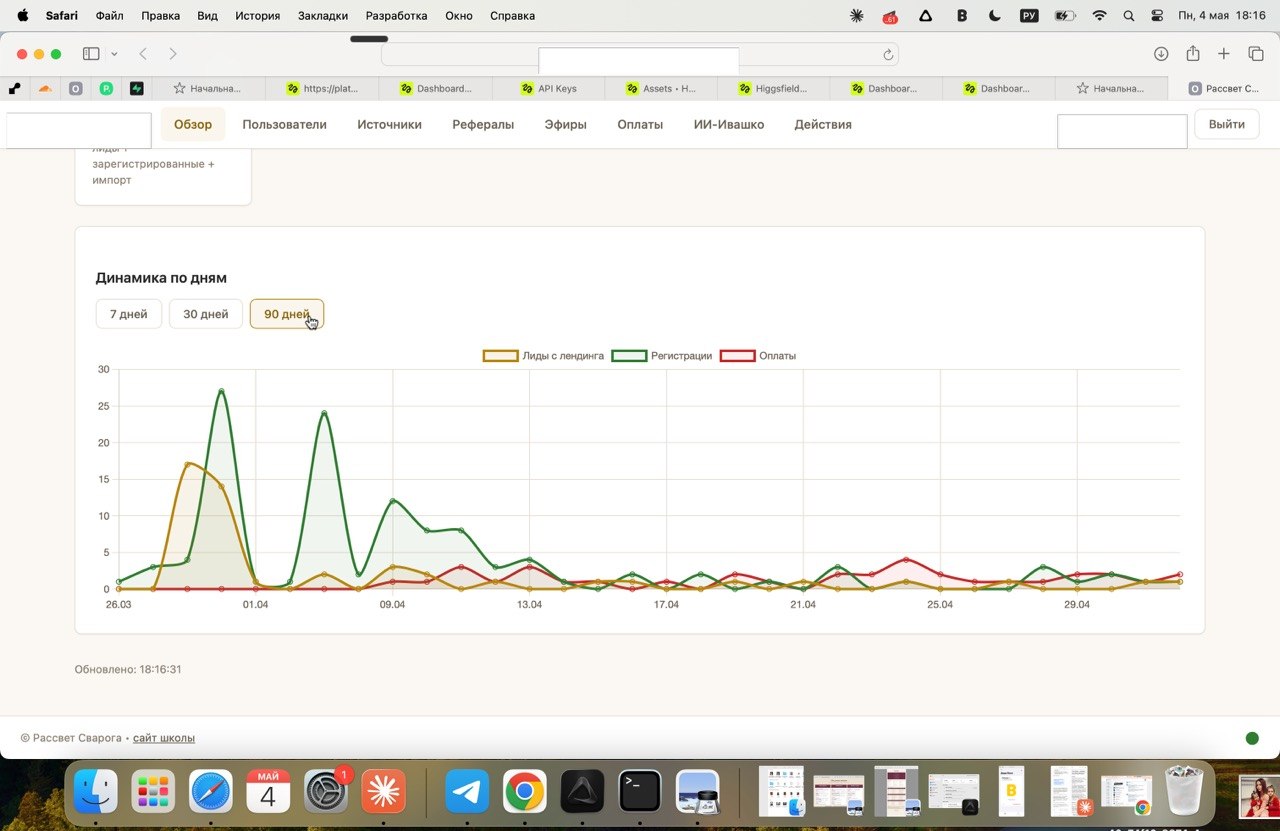
Two landing pages, a multi-step Telegram onboarding bot, a RAG agent trained on the full content library, GetCourse CRM integration, an anti-fraud referral system and an admin dashboard — delivered in 6 weeks.
NFT-Sender — Multichain NFT Infrastructure
NFT-Sender — Multichain NFT Infrastructure
Web3 · Infra
NFT-Sender is the multichain NFT infrastructure powering bulk distribution, marketplace, on-chain auctions, an explorer and a reputation game across NEAR, TON, EVM and Solana. Currently #1 on NEAR by transaction volume — 1M+ tx on a single collection, 40 collections live, 10K+ wallets in the reputation system. Built from scratch — no analogs on the market.
Mass NFT distribution on NEAR runs straight into the chain's throughput limit — a few NFTs per transaction means days to airdrop a 10K-wallet campaign. Beyond raw distribution, an NFT ecosystem also needs the layers around it: a marketplace, auctions, a wallet-level explorer, and a reason for holders to actually engage with what they own. Ideally it should reach across chains, not just one.
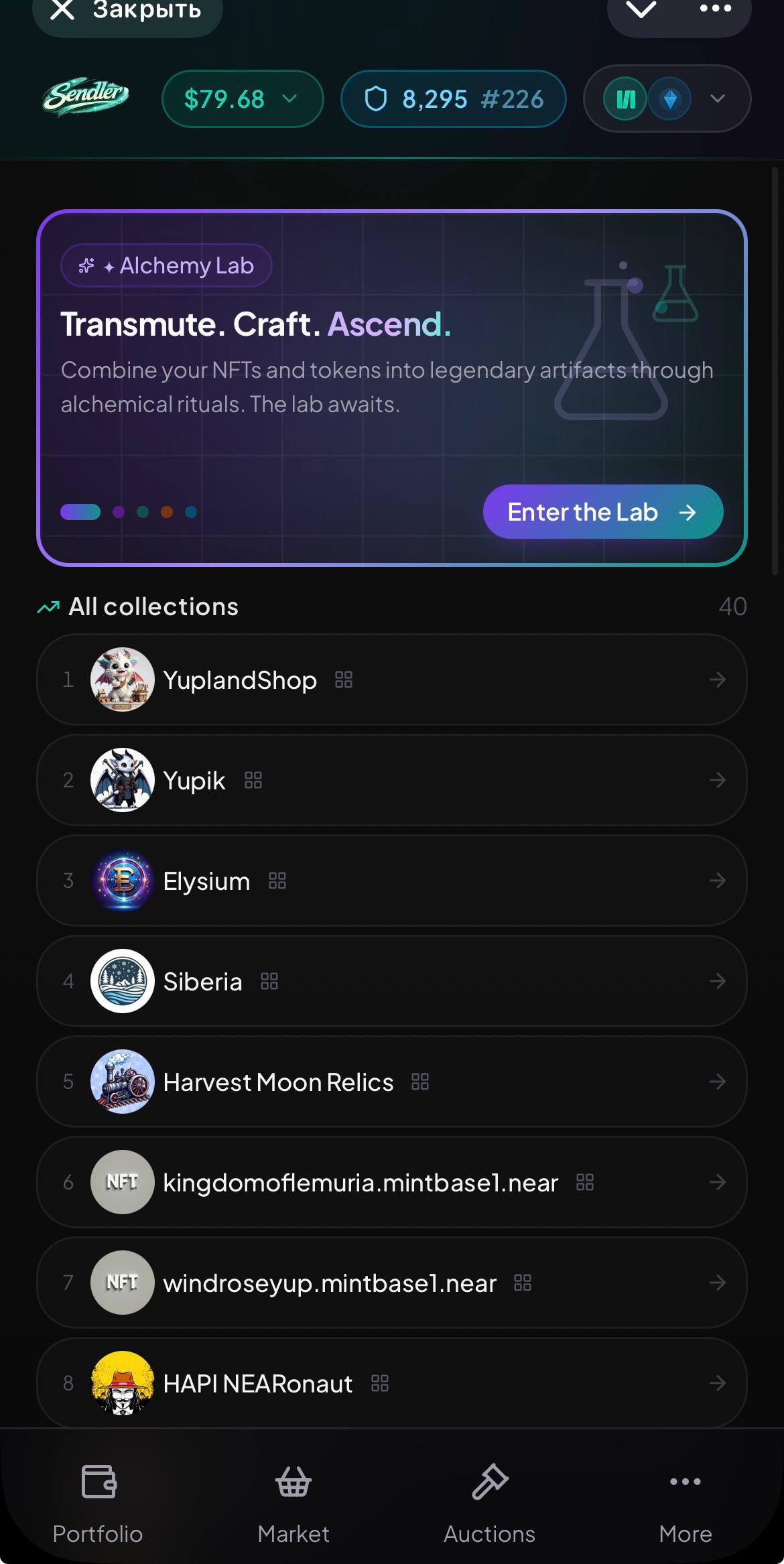
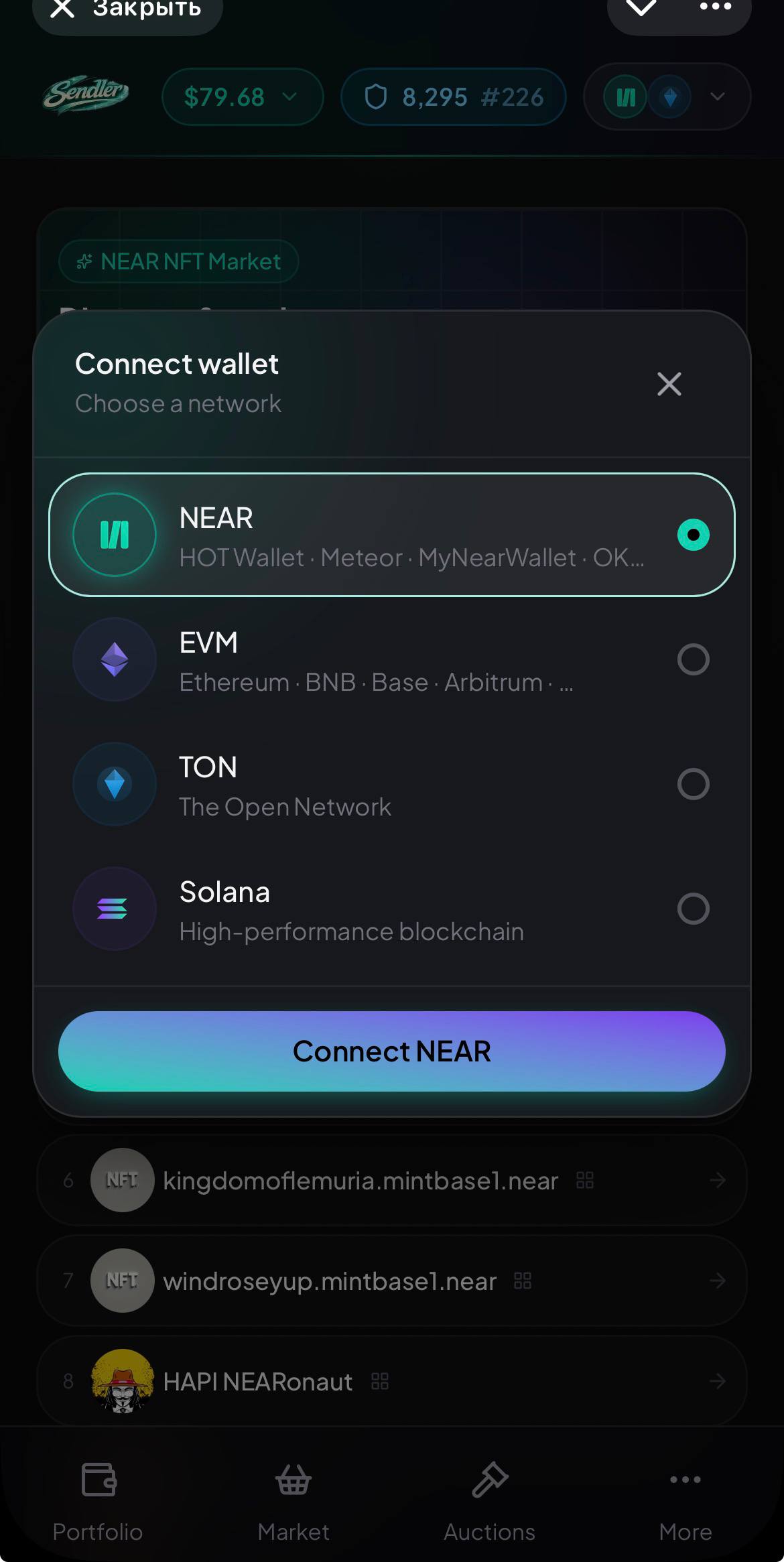
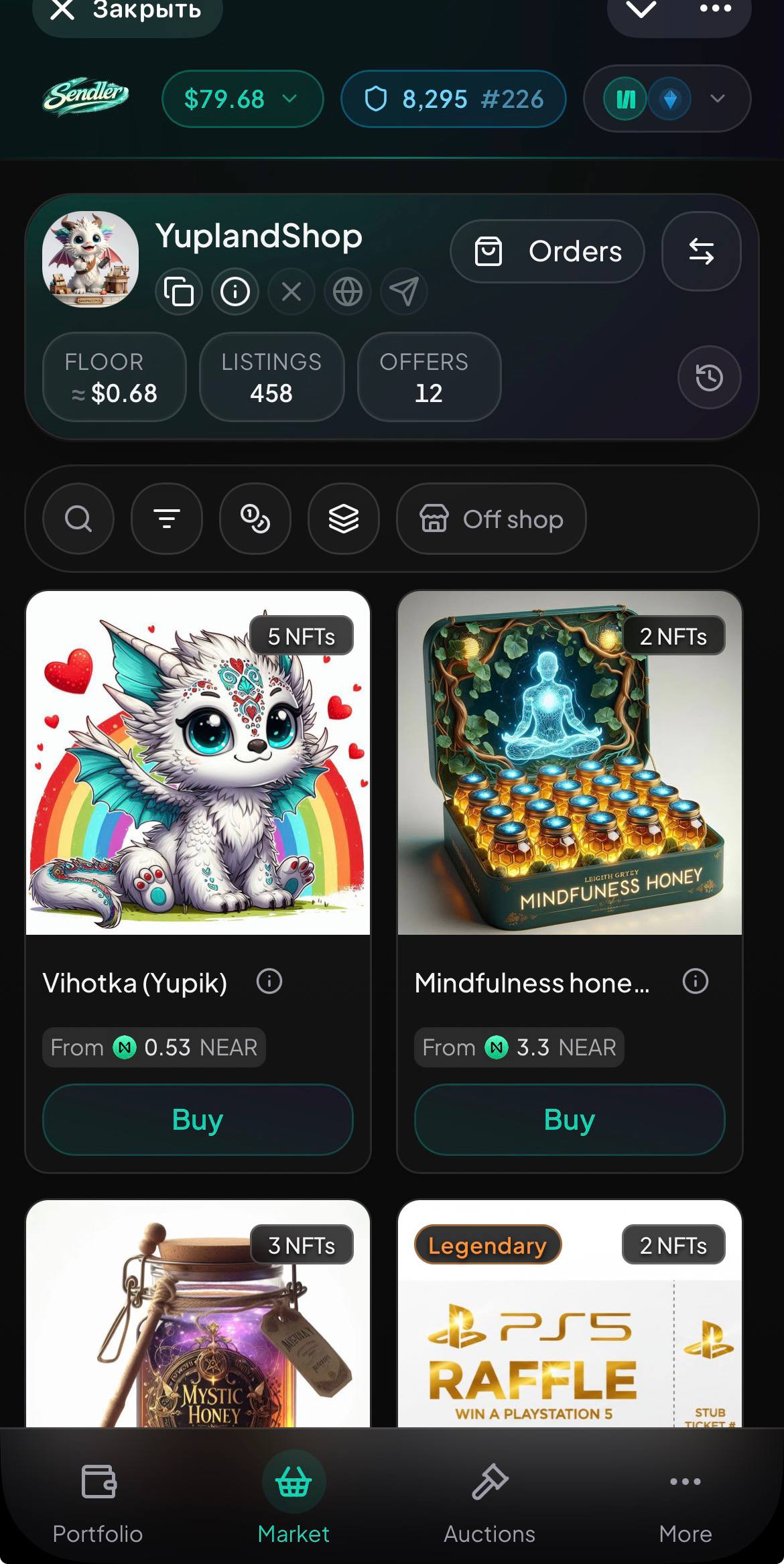
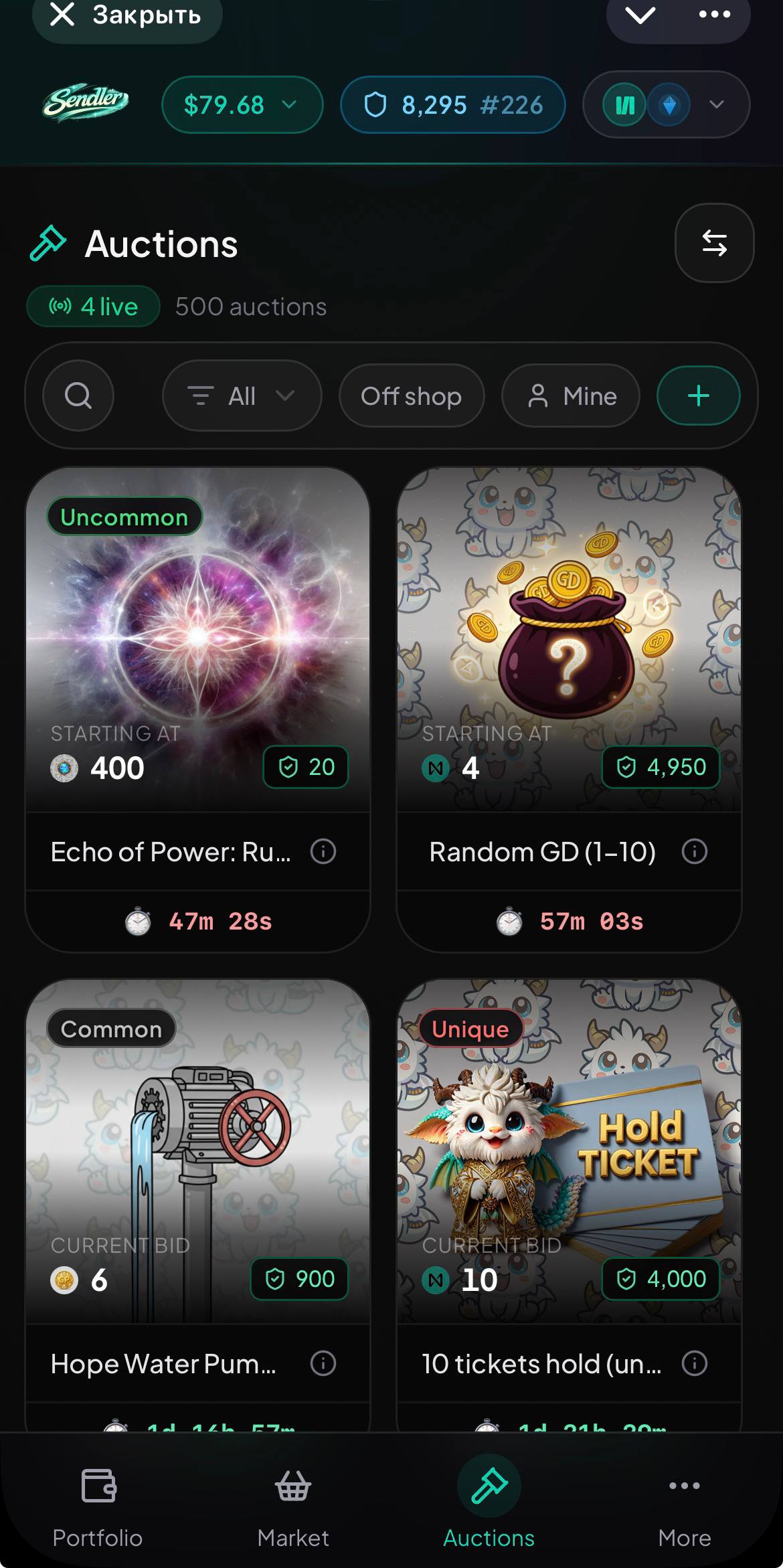
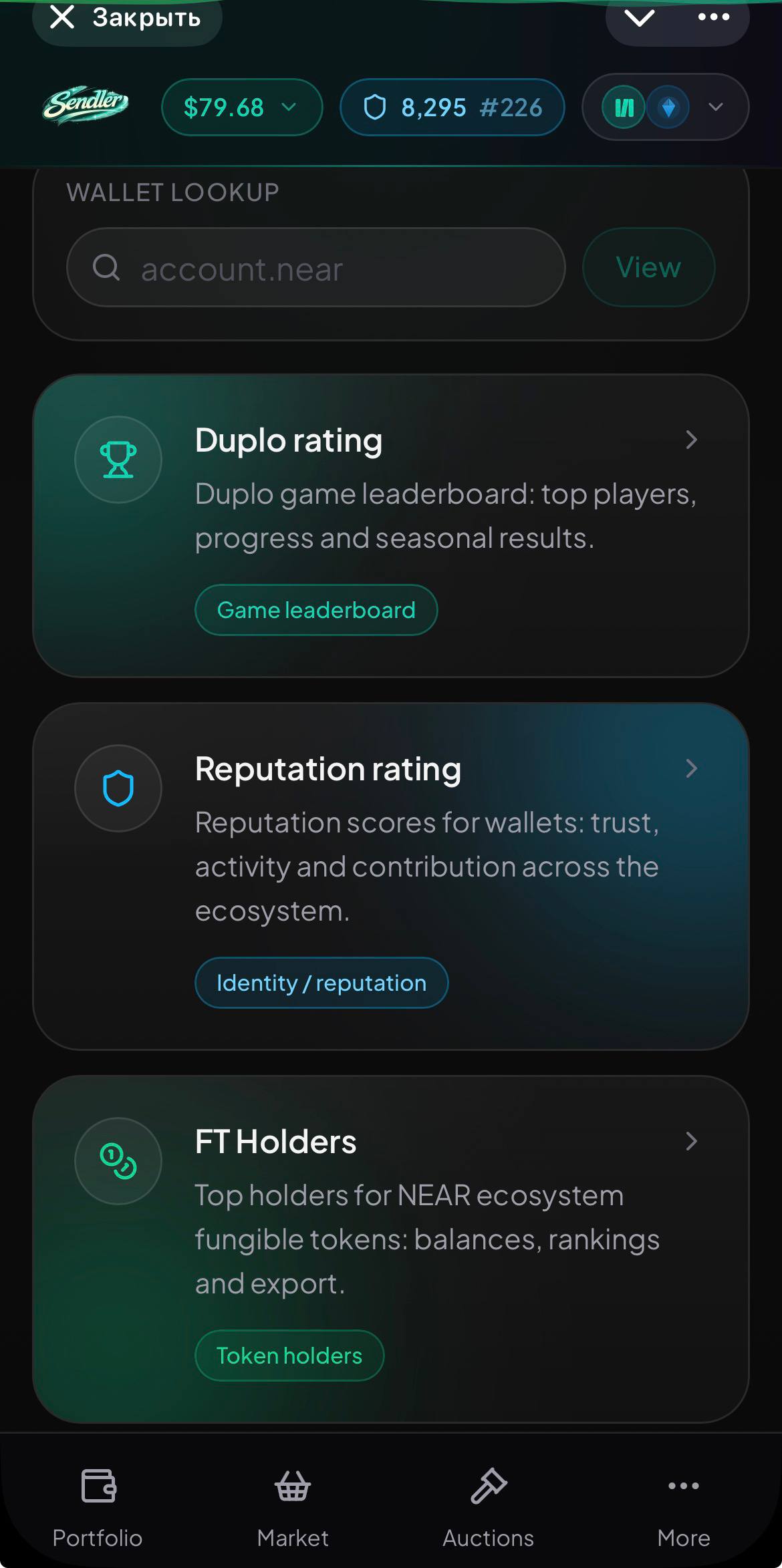
A custom infrastructure that pushes up to 120 NFTs per transaction on NEAR — a workaround for the chain's throughput limit, with no analogs on the market. Around the distribution sit a built-in marketplace and on-chain auctions, an explorer that parses 10K+ wallet addresses with full on-chain data extraction, and a reputation game where each NFT carries a positive or negative reputation coefficient and wallets compete for TOP+ and TOP- rankings. Alchemy Lab — the cross-chain crafting mechanic — plugs in here too. Cross-chain by design: NEAR, TON, EVM and Solana through one interface.
Mass distribution at scale
Up to 120 NFTs per transaction — a workaround for NEAR's throughput limit. A 10K-wallet campaign goes out in a few transactions, not hundreds. Automated airdrops and reward systems for collection launches.
Cross-chain by design
NEAR, TON, EVM and Solana collections work through one interface. Single tooling for cross-chain airdrops, drops and partner collaborations.
Marketplace, auctions & explorer
Sells, Orders and on-chain auctions inside the same service. A wallet explorer parses 10K+ addresses with full on-chain data extraction — holders, NFTs and tokens, all queryable.
Reputation game built in
Each NFT carries a positive or negative reputation coefficient. Wallets compete for TOP+ and TOP- rankings. Alchemy Lab — the cross-chain crafting mechanic — plugs in right here, turning distribution into a closed-loop economy.
- Up to 120 NFTs per transaction — custom workaround for NEAR throughput limits
- Cross-chain across NEAR + TON + EVM + Solana through one interface
- Wallet explorer parses 10K+ addresses with full on-chain data extraction
- Reputation engine — every NFT carries a positive or negative coefficient, TOP+ and TOP- leaderboards
- Alchemy Lab cross-chain crafting plugs in directly — distribution becomes a closed-loop economy
AI Content Factory
AI Content Factory
AI · PipelineA production AI pipeline that turns a single prompt into finished video or presentation — scripts, voice, visuals, motion, music, effects, fully automated end-to-end. Fallback chains at every stage across 10+ AI providers, with a hybrid free/paid layer keeping cost predictable.
Anyone can chain two AI APIs and ship a demo. Production content generation breaks the moment any single provider rate-limits, raises prices or quietly degrades quality. The pipeline needed to survive the failure of any single provider, balance free vs paid resources for cost-efficiency, and run unattended on CI — not in a tab.
A multi-stage pipeline (script → voice → visuals → motion → music → effects → assembly) where every stage has a graceful fallback to another provider. TypeScript + Node for orchestration, Python for AI calls and asset processing, ffmpeg + Pillow for media stitching. Runs on GitHub Actions as the execution engine — every generation is a CI job, fully reproducible. 10+ AI providers behind one router.
Fallback at every stage
Provider routing with automatic failover at script, voice, visuals, motion, music and effects layers — no single API can take down a generation.
CI-based execution
Runs as GitHub Actions jobs — unattended, reproducible, observable. Every generation is a CI run with logs, artifacts and retry semantics out of the box.
Hybrid free / paid routing
Free-tier providers wherever quality survives, paid providers where it doesn't. Cost stays predictable instead of bursting on every job.
Single prompt → finished media
Script + voice + visuals + motion + music + effects, chained automatically into a finished video or presentation. Prompt in, file out.
10+ AI providers, fallback at every stage, runs on CI — script → voice → visuals → motion → music → effects → assembly, all from a single prompt.
- 10+ AI providers orchestrated through one router with per-stage automatic failover
- Pipeline stages: script → voice → visuals → motion → music → effects → final assembly
- Hybrid free / paid routing balances quality vs cost predictably
- GitHub Actions as the execution engine — every run is a CI job, fully reproducible
- ffmpeg + Pillow stitch generated assets into finished video and presentation outputs
- TypeScript + Node for orchestration, Python for AI calls and asset processing
YupJarvis — Ecosystem AI Agent Builder
YupJarvis — Ecosystem AI Agent Builder
AI · No-codeYupJarvis is a no-code visual builder for LLM agents and pipelines — a drag-and-drop graph editor that chains 7 kinds of agents (LLM, Classifier, Extractor, Tool, Memory/RAG, Judge, Orchestrator), with triggers, public API, RAG over pgvector and a run journal with drill-down. Designed and built end-to-end by the studio.
Building a production-grade LLM pipeline means stitching together agent types, retry logic, vector memory, tool calls, condition routing, run logs and access control by hand for every new project. The studio needed one substrate that turns this into a graph the team can draw, version and ship — not yet another framework wrapper.
A full Next.js 15 + Supabase application with a React Flow editor (16 node types and 7 agent kinds), JMESPath-powered Mapper/Condition routing, RAG on pgvector with an embedding pipeline, public API + webhook trigger, and a run journal with metrics, limits and drilldown UI. Configs validated through Zod, strict TypeScript across the stack, 302 test assertions across 11 test files — schemas, runner, classifier routing, tool calls, memory, judge, orchestrator and API.
Visual graph editor
React Flow with 16 node types, drag-and-drop wiring, Zod-validated configs per node — designers draw the pipeline instead of writing boilerplate.
7 agent kinds out of the box
LLM, Classifier, Extractor, Tool, Memory/RAG, Judge, Orchestrator. Each one a first-class node with typed schema, retries and observability.
RAG inside Supabase
pgvector storage, a separate embedding pipeline (OpenAI), retrieval as its own node type. Memory and RAG share the same substrate.
Run journal & public API
Every run logged with token and duration metrics, per-project limits, drilldown UI. Webhook trigger and public REST API expose any agent to the outside world.
16 node types, 7 agent kinds, 302 test assertions — built solo end-to-end on Next.js 15 + Supabase. Strict TypeScript, zero compile errors.
- React Flow graph editor with 16 node types and Zod-validated per-node configs
- 7 agent kinds: LLM, Classifier, Extractor, Tool, Memory/RAG, Judge, Orchestrator
- JMESPath-powered Mapper and Condition nodes for routing and transformation
- pgvector RAG inside Supabase with a separate embedding pipeline (OpenAI)
- Webhook trigger + public REST API for invoking any agent from outside
- Run journal — every step logged with token/duration metrics, limits and drilldown UI
- 302 test assertions across 11 files: schemas, runner, classifier routing, tool, memory, judge, orchestrator, API keys, webhook
- TypeScript strict, tsc --noEmit clean
Alchemy Lab — Cross-Chain Crafting
Alchemy Lab — Cross-Chain Crafting
Web3 · Multi-chain
Alchemy Lab is a cross-chain NFT crafting mechanic unique on the market — players combine NFT components by recipes across NEAR and TON to mint brand-new NFTs in a closed-loop economy. Trade → craft → burn → mint, on two blockchains at once.
NFT inflation kills value: once mass-minted, collections sit in wallets with nowhere to go. The fix had to make burning attractive — a game where players want to take NFTs out of circulation — and work across two blockchains so liquidity flows from both. And it had to be easy enough for partners to drop their NFTs into the same loop without rebuilding anything.
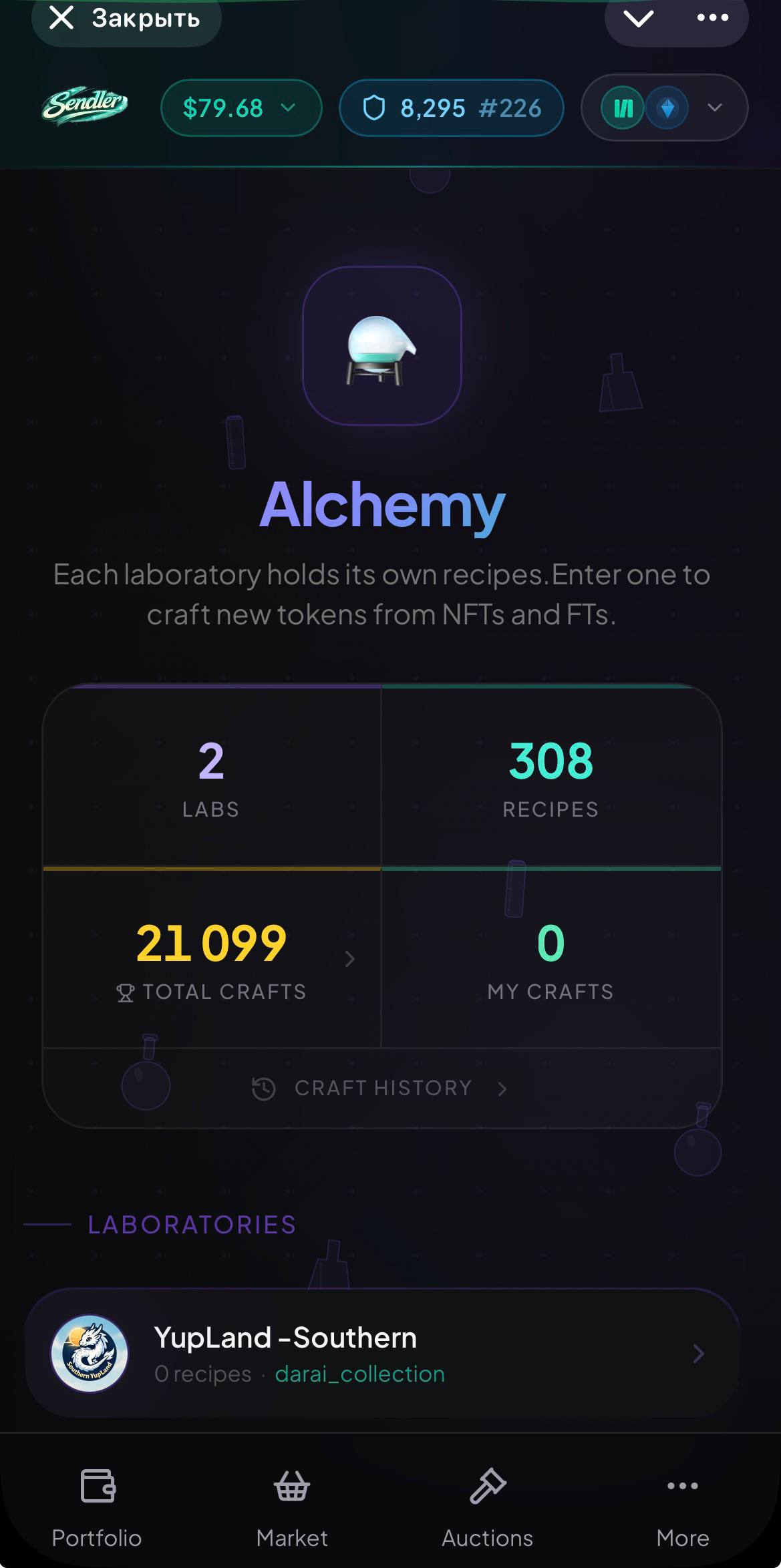
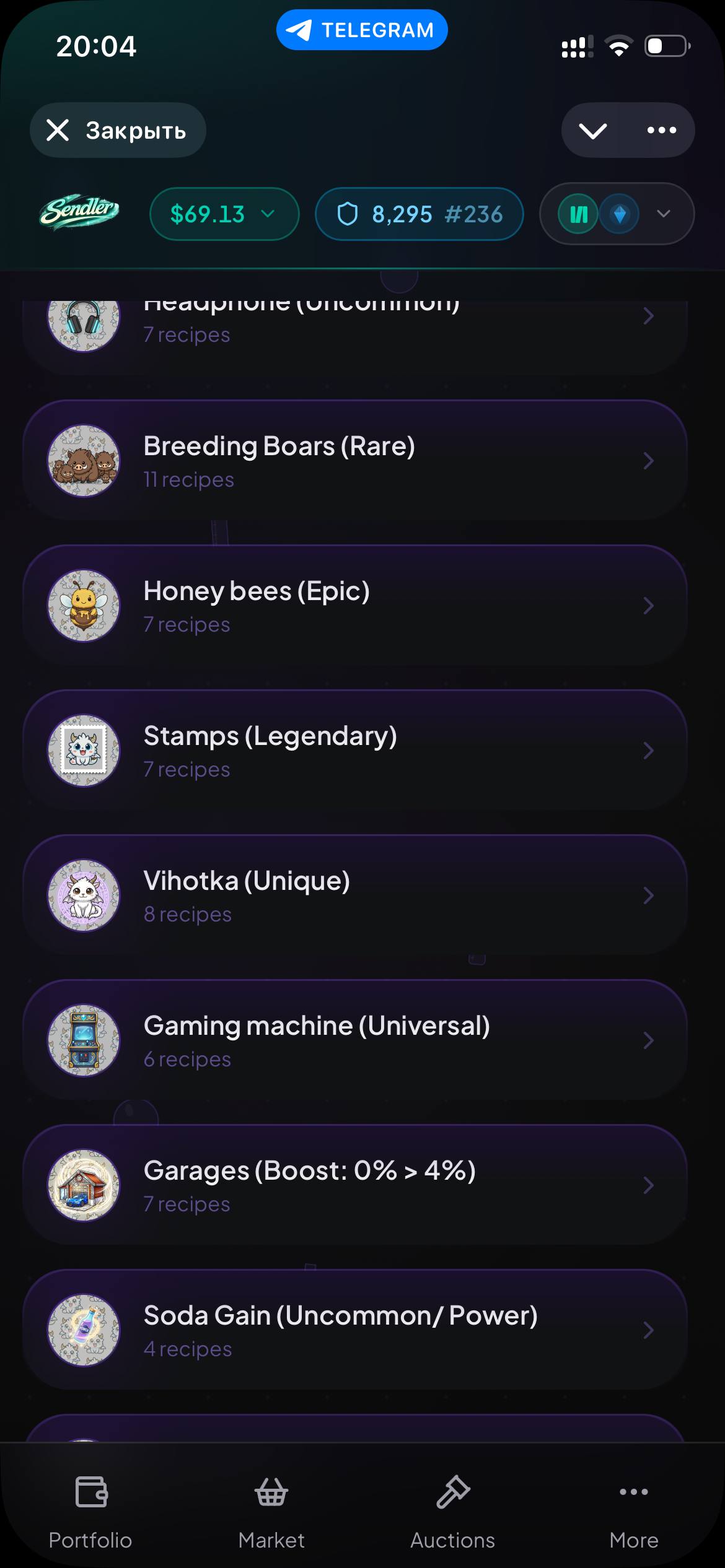
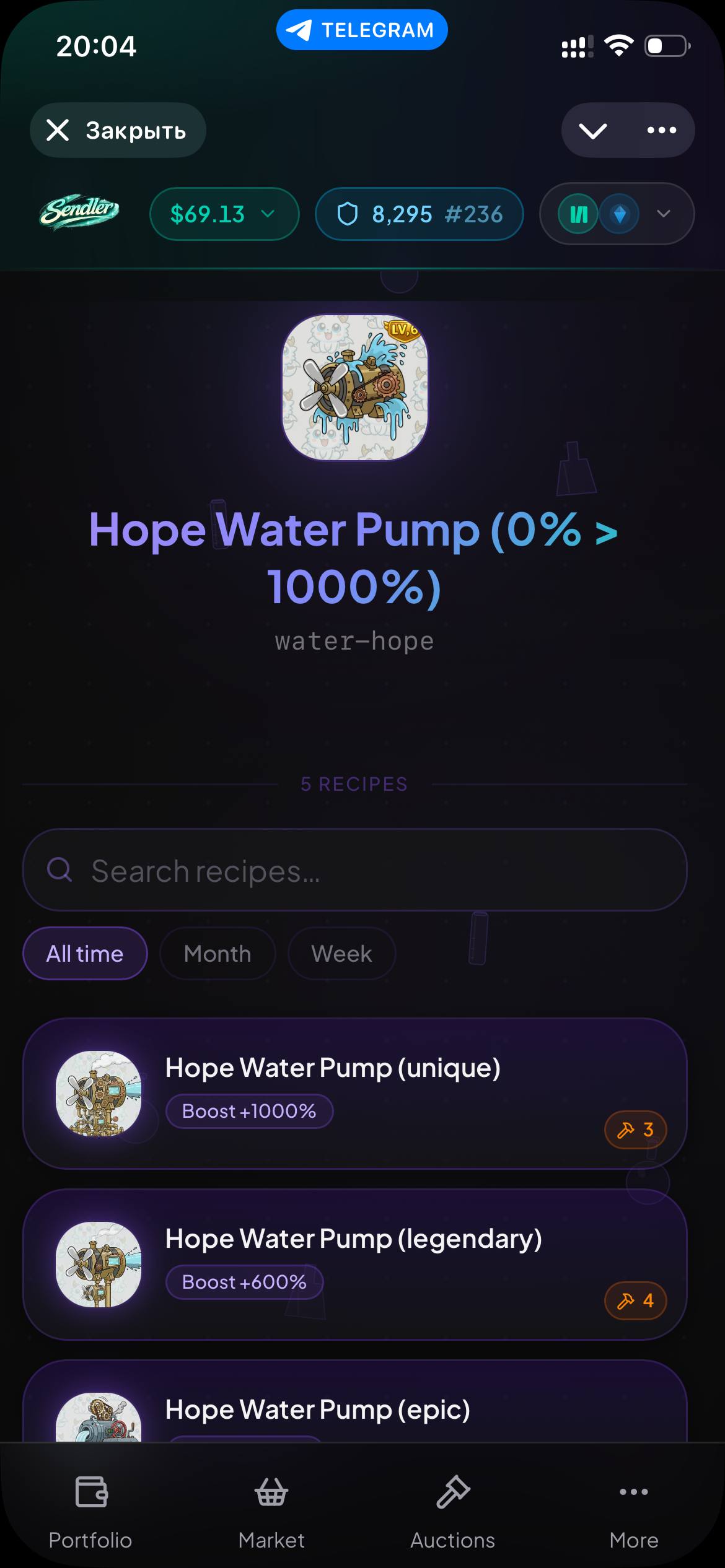
A custom recipe engine on top of NEAR + TON smart contracts and cross-chain bridge logic. Players combine NFT components by recipe to mint new NFTs — and the burned originals leave circulation forever. The same surface accepts partner NFTs, so external projects plug into the lab and get instant collab without writing their own crafting layer. 317 live recipes today, 34K+ crafts completed, TOP-2 on HOTCraft.
Cross-chain crafting
NEAR + TON in one closed loop. Liquidity from two blockchains feeds the same recipe library — combine components from either chain to mint new NFTs.
Burning solves inflation
Players themselves take NFTs and tokens out of circulation via crafting. Mass-minted supply is removed not by penalties but by a mechanic players choose.
Retention through recipes
317 recipes ship today — from basic to rare combos and boosts. Players come back daily to chase rare results.
Partner-ready surface
External projects drop their NFTs into the Lab — instant collab. The recipe engine is generic enough for any project to plug in without rebuilding crafting from scratch.
- Cross-chain bridge logic uniting NEAR + TON liquidity into one recipe pool
- Custom recipe engine — any NFT bundle definable as a craftable input
- Burning + minting in one transaction per recipe
- Partner-ready surface — external NFTs plug in without code
- 317 recipes live, 34K+ crafts completed, TOP-2 on HOTCraft
YupDar — AI Mini App for Self-Discovery
YupDar — AI Mini App for Self-Discovery
AI · Vibe-coding
A trilingual self-discovery ecosystem (RU / EN / ES) on the 64 Daram system — Telegram Mini App + a public web landing on one codebase, with a premium daily-companion layer ARKA on top. AI-generated literary portraits (8 psychological sections per user), oracle as a card spread, compatibility, hero's journey 2.0 with cross-user Daram unlocks, shadow quests, PvP card game. Books published in EN / ES on Amazon and on Litres in RU. A scientific track in parallel — DAR-27v2 research questionnaire, scientific-article DOCX builders, application to the World Science Championship in Dubai. Built solo by the book's author with Claude Code.
Turning a published esoteric book on the 64 Darams into a living interactive product required AI capable of writing literary Russian indistinguishable from the author's voice. Off-the-shelf models produced "professional" Russian — methodical, cliché-laden, sprinkled with Latin tokens, with broken gender agreement. Declarative bans inside the prompt didn't hold. And the product had to ship as both a Telegram Mini App AND a public SEO-landing — one codebase, two surfaces.
A two-layer Russian-AI quality stack: prompt v7 with the author's ~600-word reference text baked in as a stylistic anchor, plus a programmatic postprocessor russifyText() with 60+ regex defenses against forbidden constructions (clichés, Latin, broken gender, formulaic openings). Provider routing — DeepSeek-V3 primary (~$0.0024 per message), Groq Llama 3.3 70B as automatic fallback, Llama 3.1 8B as second fallback. response_format: json_object guarantees parseable output for 8-section portraits. Yandex Speller post-pass with a protected glossary. Same backend serves both the Mini App and the yupdar.com landing — split only at the HTML entrypoint level. On top of the base game the studio shipped a premium ARKA layer (a daily companion in the rhythm of the user's Daram — power windows, archetype-voiced rituals, AI strategy assistant, mentor brief, content plan), Hero's Journey 2.0 (a viral mechanic to unlock the Darams of close ones via referrals, crystals or direct payment), a Pricing v2 subscription system (1/3/6/12 months, up to −33% off, −50% first-month promo, YuKassa-wired), and a secondary doTERRA affiliate channel (essential oils mapped to each Daram). Full localization rolled out to English and Spanish across the entire interface, the encyclopedia and the in-app book reader (RU 94 / EN 99 / ES 87 chapters). In parallel a scientific track is running — the DAR-27v2 research questionnaire, DOCX builders for scientific articles, an application submitted to the World Science Championship in Dubai.
Literary AI portraits, trilingual
8-section JSON output per user — Archetype, Essence, Superpowers, Flow, Relationships, Traps, Key to Self, Purpose. ~5K–6K chars of structured literary text per generation. Fully localized to Russian, English and Spanish across portraits, oracle and encyclopedia.
ARKA premium daily layer
A daily companion in the rhythm of the user's Daram, sitting above the base game. Power windows, archetype-voiced rituals tied to doTERRA essential oils, task tracker with load types, AI strategy assistant, mentor brief, finances, content plan, week review — all in the archetype's voice. Prototype isolated in a sandbox so prod stays untouched.
Hero's Journey 2.0 — viral mechanic
Users now unlock the Darams of close ones (partner, friends, parent of a child) via referrals, crystals or direct payment. Each user becomes a conductor into YupDar for the people around them — and a new revenue surface.
Scientific track in parallel
DAR-27v2 research questionnaire, DOCX builders for scientific articles, application submitted to the World Science Championship in Dubai. A dedicated "Science 🔬" tab in the new architecture preview. International recognition of the Daram system is an explicit goal.
Trilingual (RU / EN / ES). Premium ARKA layer on top of the base game. Viral cross-user Daram unlocks. Pricing v2 subscriptions. doTERRA affiliate. Scientific track to the World Science Championship in Dubai. Books on Amazon and Litres. All shipped solo by a book author through Claude Code.
- DeepSeek-V3 primary, Groq Llama 3.3 70B fallback, Llama 3.1 8B as second fallback
- response_format: json_object — guaranteed valid JSON for 8-section literary portraits
- russifyText() programmatic postprocessor — 60+ regex defenses against forbidden constructions
- Author's ~600-word reference text baked into prompt v7 as a stylistic anchor
- Yandex Speller post-pass with a protected glossary for system terms
- Full RU / EN / ES localization across interface, oracle, encyclopedia and the in-app book reader (RU 94 / EN 99 / ES 87 chapters)
- ARKA premium layer: a daily companion in the rhythm of the user's Daram — sandboxed prototype isolated from prod (iram-prototype/)
- Hero's Journey 2.0 — viral mechanic to unlock close-ones' Darams via referrals / crystals / direct payment
- Pricing v2 — 1/3/6/12-month subscriptions with discounts up to −33%, −50% first-month promo, YuKassa across all tiers and periods
- doTERRA affiliate channel — essential oils mapped to each Daram, second monetization line
- DAR-27v2 research questionnaire, DOCX builders for scientific articles, application submitted to the World Science Championship in Dubai
- 11 Vercel serverless endpoints; content.js routes 6 generation types
- Supabase Postgres — 11+ tables, 11 SQL migrations, RLS + service-role split
- HMAC-SHA256 validation of Telegram initData; anonymous web sessions with migration into Telegram
- PDF.js-powered in-app reader for the 212-page authored book (RU / EN / ES)
- Telegram Stars admin tab with live bot balance via API + DB reconciliation
- Architecture preview rebuild — new 4-tab nav (Я / Семья / Сокровищница / ARKA) + Science 🔬 header, deployed to a separate preview surface
- 41 "project laws" in Claude Code memory system
Yupland Lottery — Live Stream Raffle
Yupland Lottery — Live Stream Raffle
AutomationAn automated service for live-stream raffles — replaces the manual stream operator with a one-click pipeline. Streamer picks parameters, the system runs a fair randomizer, delivers the result through Telegram, syncs to a real-time admin view and renders output in the streamer's custom format.
Running a live raffle on a stream is fragile manual work — the operator collects entries off-camera, randomizes them in a spreadsheet, then tries to present the result believably. It eats time during the stream, breaks the moment anyone questions the randomness, and doesn't scale across multiple streamers running the same flow.
A one-click automation: a TypeScript + Node service collects entries through a Telegram bot, runs a fair randomizer with verifiable output, syncs the result in real time to an admin dashboard the streamer reads from, posts the winner back to Telegram and renders results in a custom on-camera format. The streamer goes from "okay let me pull up the spreadsheet" to a single button press.
Fair randomizer
Verifiable output that takes the trust question off the table during a live stream — no "wait, who picked the winner?" debates in chat.
Real-time event sync
Admin dashboard updates as entries arrive; the streamer reads from one view instead of switching tabs mid-stream.
Telegram-native delivery
Entries in, winner out, all through a Telegram bot. No external accounts to manage, no extra channels to publish to.
Custom result formatting
Output renders in the streamer's own style — ready to read on-camera without copy-paste gymnastics.
One click on stream, one fair winner — replaces what used to be a manual back-stage scramble.
- Fair randomizer with verifiable output
- Telegram Bot API integration for entries and result delivery
- Admin dashboard with real-time event sync
- Custom result formatting per streamer
- One-click automation replaces manual stream-side raffle ops
Duplo — On-chain Combo Game
Duplo — On-chain Combo Game
Web3 · Game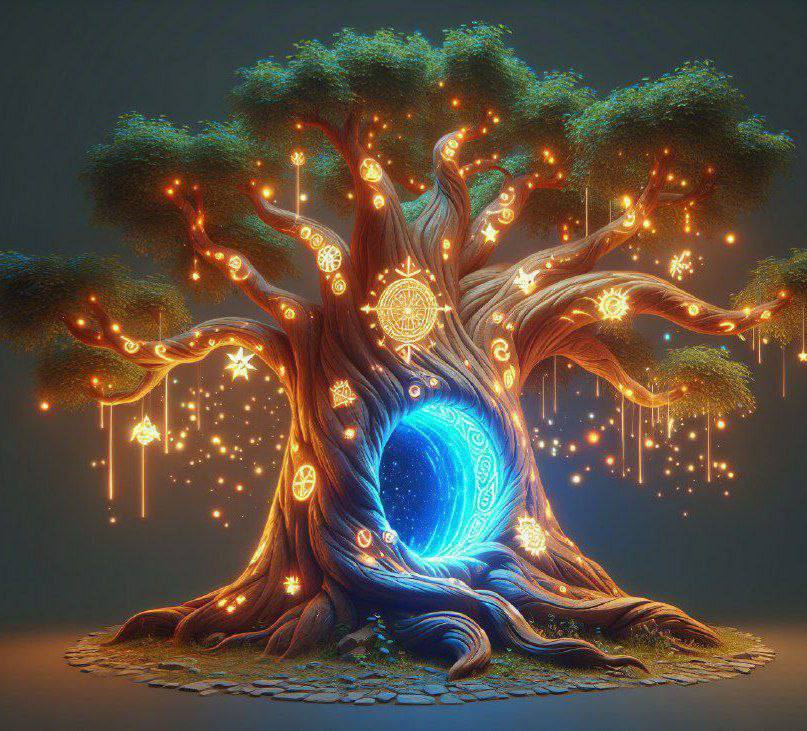
Duplo is the burn-and-reward game at the heart of Yupland — players send NFTs and tokens to the Duplo wallet, the engine matches them by recipe and pays out rewards on-chain. Two implementations: the original game (manual play, with a rating) and the version integrated into YupLand Portal (automated, no rating, runs inside the daily loot loop).
An ecosystem with mass-minted NFTs needs a sink — a way to take supply out of circulation that feels like a game, not a penalty. Players also need a reason to actively combine the NFTs they own. The same mechanic had to work two ways: as an original game (manual play, leaderboard) and as an automated daily loop inside a larger portal (no rating, broad reach).
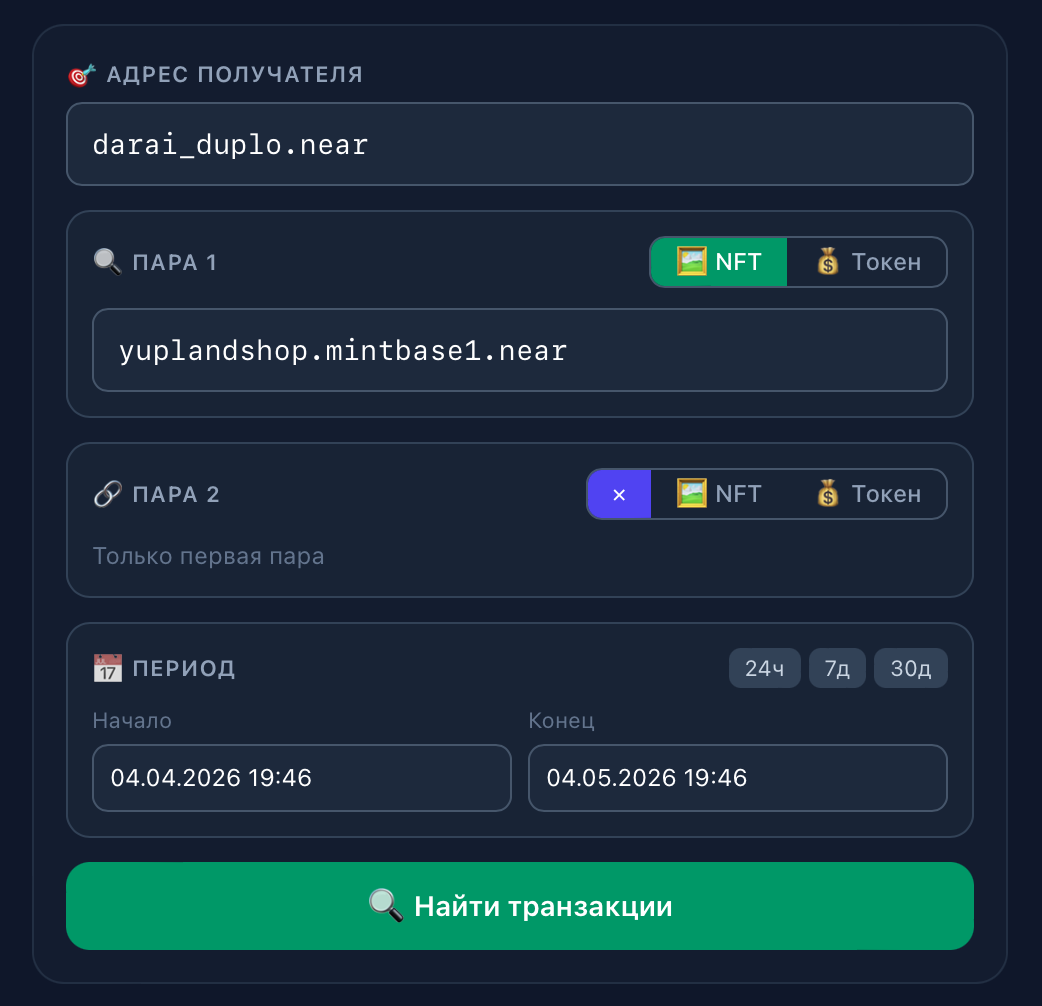
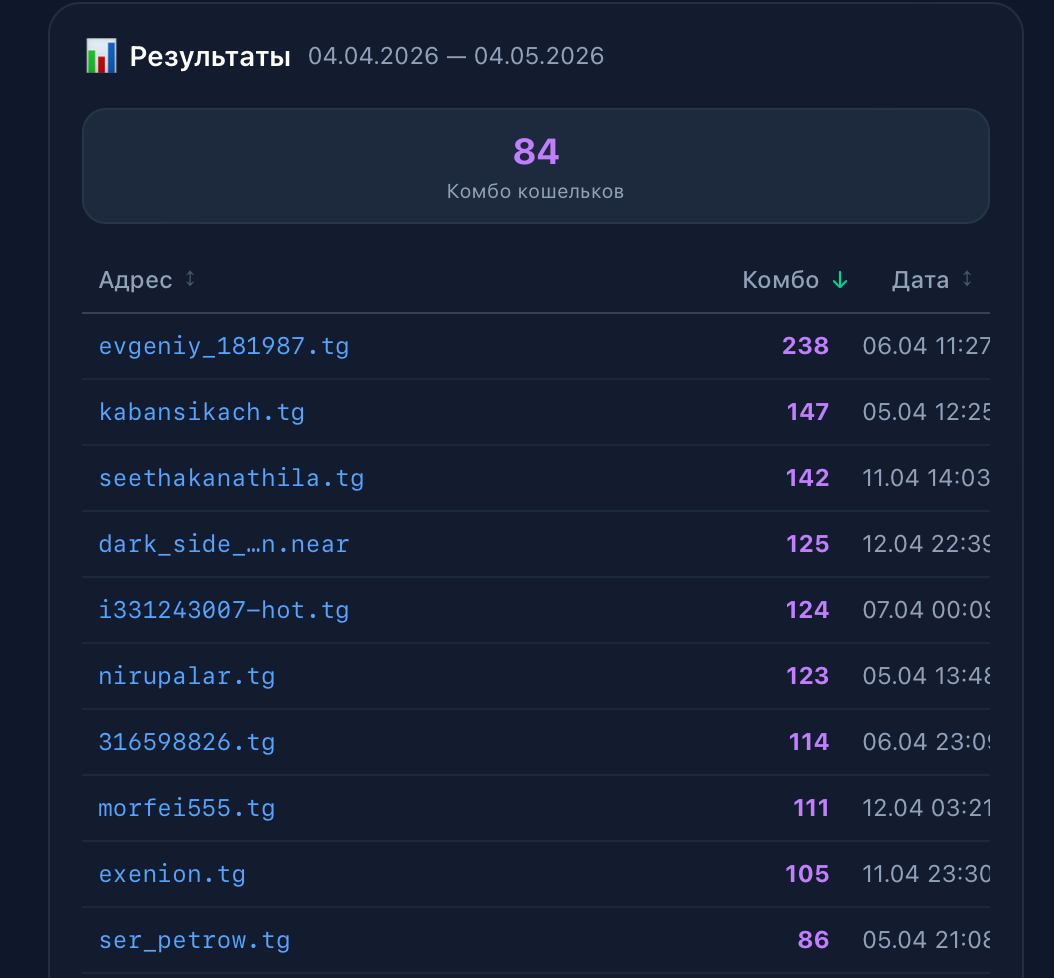
A burn-and-reward engine with two faces, sharing one on-chain wallet and one recipe library. Original game: a custom blockchain parser watches transfers to the Duplo wallet in real time, identifies multi-asset combinations by recipe (NFT + token bundles, time-window logic), computes rewards and maintains a leaderboard. Portal version: the same combo logic but fully automated inside YupLand Portal — players don't send transfers manually; the portal triggers burn → combo check → reward inside its daily loot loop. Both versions feed the same wallet, putting supply out of circulation across the whole ecosystem.
Original game (with rating)
Players send NFTs and tokens to the Duplo wallet manually. A custom parser identifies valid combinations in real time, computes rewards and maintains a leaderboard.
Portal version (automated)
Same combo logic, no manual transfers. YupLand Portal runs burn → combo check → reward inside its daily loot loop. No rating — designed for breadth, not competition.
Multi-asset combo engine
Detects bundles of NFTs + tokens by recipe. Time-window logic, configurable reward tables, multi-chain (NEAR + TON).
Shared on-chain sink
Both versions feed the same Duplo wallet — a fun supply sink at scale. Players take NFTs and tokens out of circulation because they want to, not because they have to.
- Real-time on-chain parser watching the Duplo wallet for incoming bundles
- Multi-asset combination detection (NFT + tokens) with time-window logic
- Shared recipe library across both implementations
- Automated burn → combo → reward path inside YupLand Portal (no manual tx)
- Configurable reward tables, multi-chain (NEAR + TON)
NFT Collection Launch Service
NFT Collection Launch Service
Web3 · Pipeline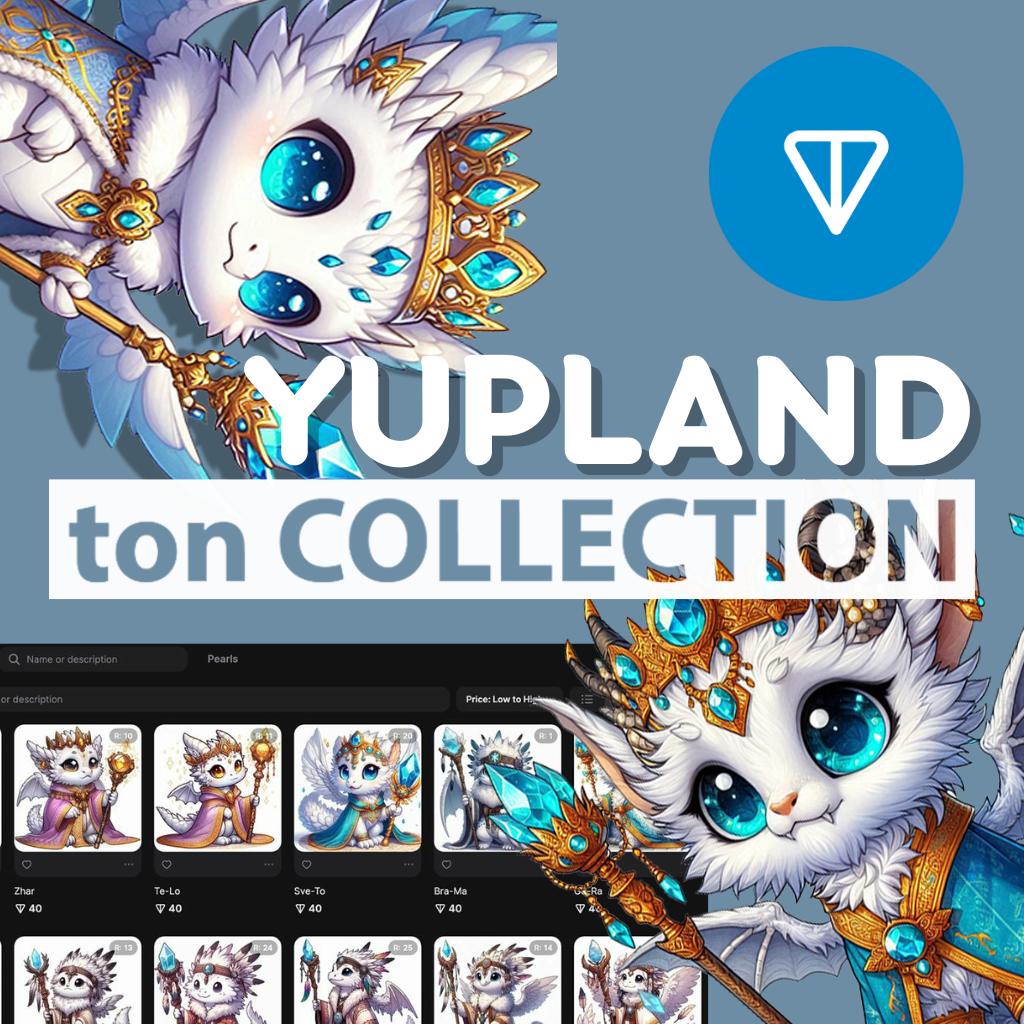
A full pipeline for launching custom NFT collections on NEAR and TON — from art assembly to on-chain deploy. Trait generator from art components, smart contract templates, custom token tooling and a mint flow integrated with launch landings. Reused across multiple collection launches by the studio.
Every NFT collection launch hits the same pipeline: assemble traits into final images, deploy a smart contract, build a mint UI, wire it into a landing. Doing it from scratch each time burns weeks per launch. The studio needed a reusable pipeline that takes art components in and delivers a live mint on the other end.
An end-to-end pipeline: a trait generator stitches art components into final NFT images by rarity rules, a smart contract template handles NEAR or TON deployment, custom token tooling manages token-side configuration, and the mint flow is integrated with launch landings as a drop-in component. Art in → button → live mint out.
Trait generator
Combines art components into final NFT images by rarity rules. Same input layer feeds both chains.
Multi-chain smart contracts
NEAR and TON contract templates plugged into the same pipeline — one configuration, two deploys.
Custom token tooling
Token-side configuration managed alongside contract deploy — collection metadata, supply, royalties.
Mint flow + landing
Drop-in mint component for the launch landing — wallet connect, mint button, supply counter, all wired in.
Art → contract → mint, multi-chain, reused across multiple launches by the studio.
- Trait generator stitches art components into final NFT images per rarity rules
- Smart contract templates for NEAR and TON, plugged into the same pipeline
- Custom token tooling for token-side configuration (metadata, supply, royalties)
- Mint flow integrated as a drop-in component for launch landings
- Pipeline reused across multiple collection launches
AI Image Generation Bot
AI Image Generation Bot
AI · TelegramA production Telegram bot that generates stylized personal images while keeping the user's identity recognizable across every generation.
Preserve a recognizable face through heavy stylization, keep generation costs under control and handle bursty async load — all shipped fast.
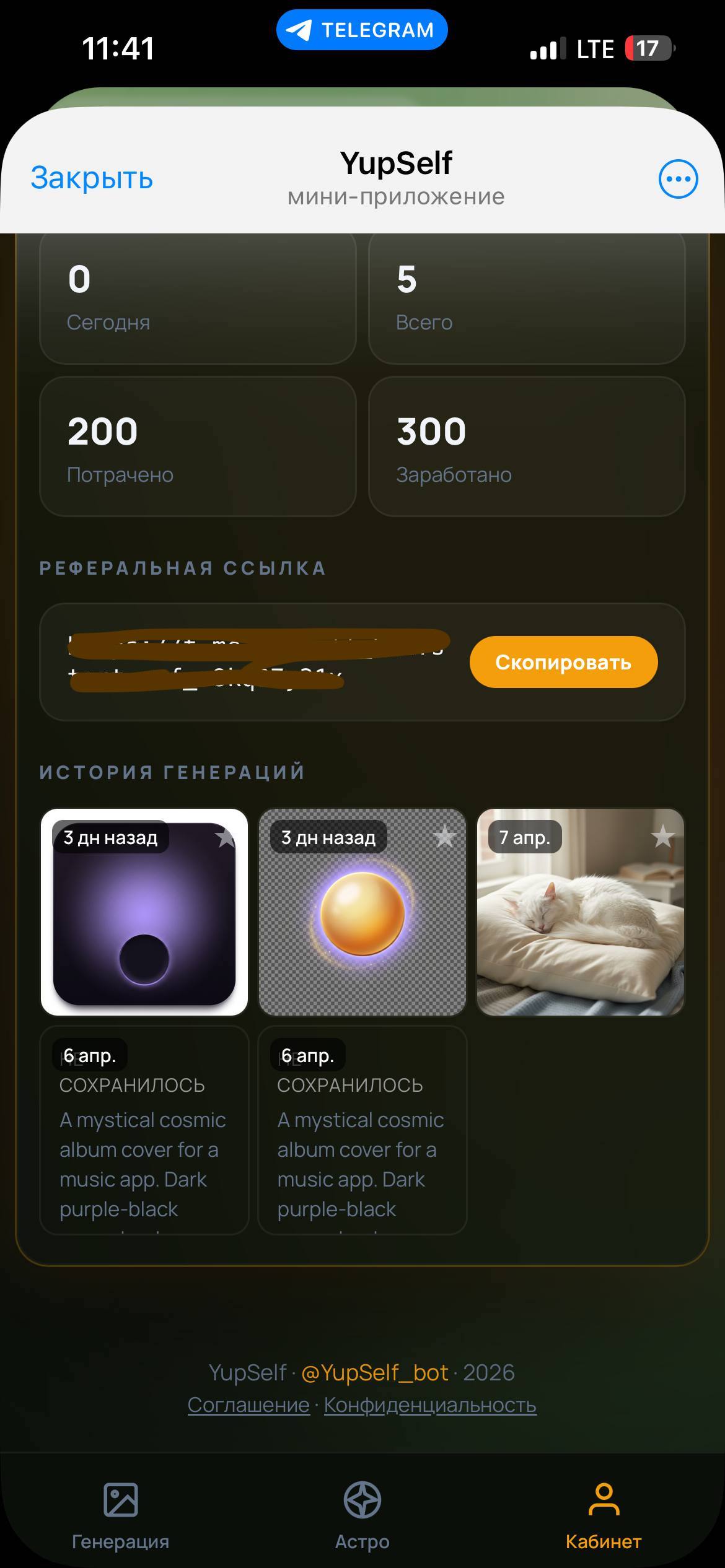
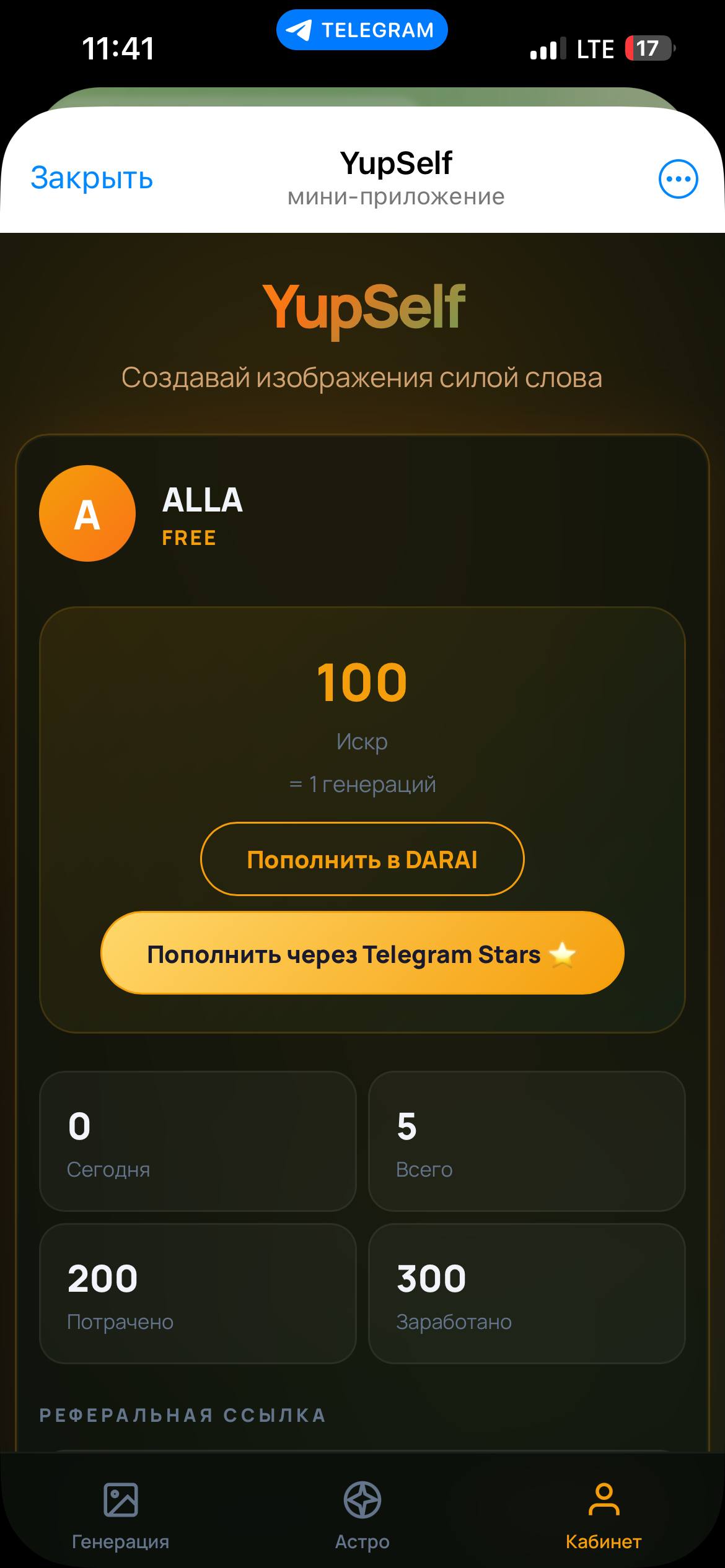
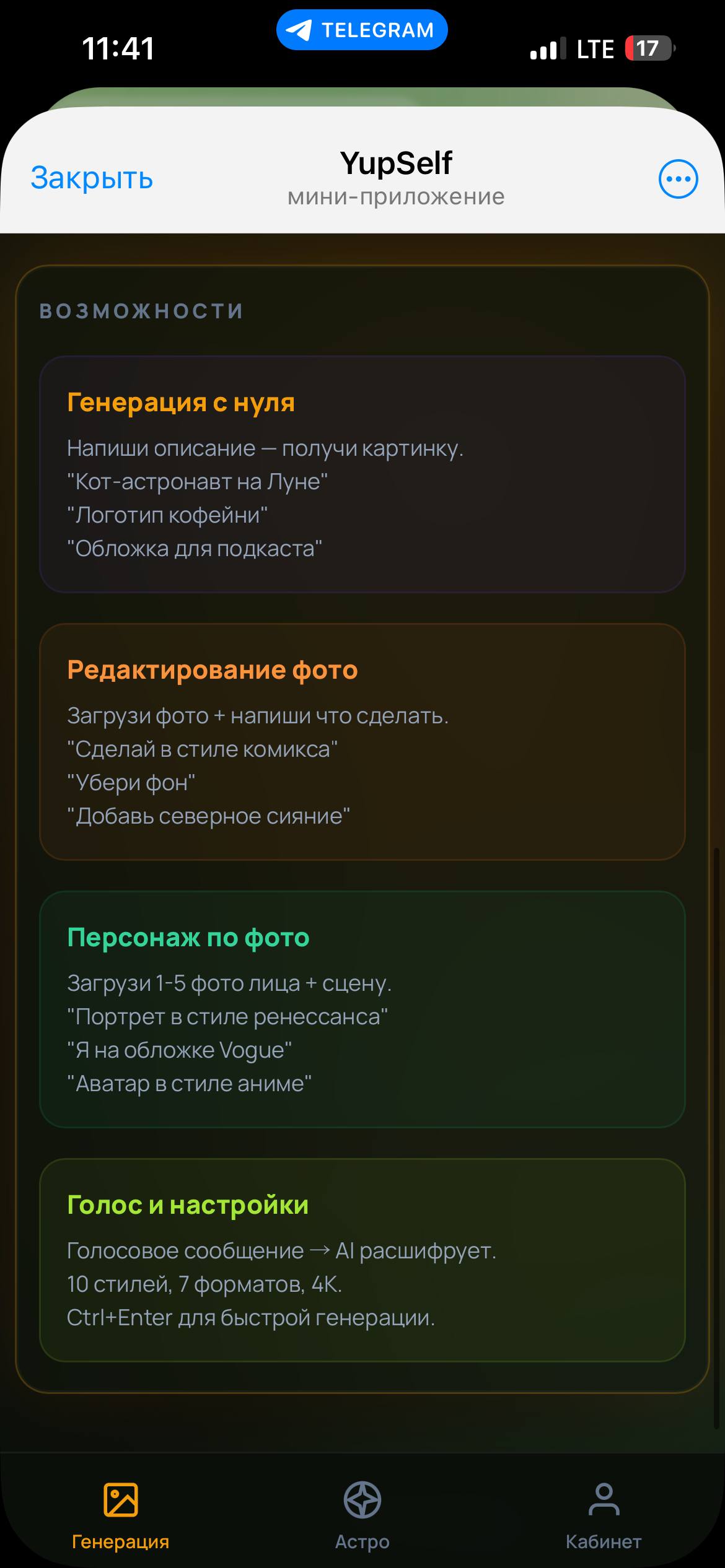
A multimodal input layer, dual-API failover for cost optimization, an async job architecture and crypto payments — live in 10 days.